
Nairobi is home to thousands of small businesses offering valuable products and services, from furniture shops and restaurants to consultants, creative professionals, retail stores, and technology companies. Many of these businesses already use WhatsApp, Facebook, Instagram, or other digital platforms to communicate with customers and promote what they offer.
However, having social media pages alone may not be enough. When potential customers search Google for a product or service, a business with little or no professional online presence can miss valuable opportunities to build trust and generate enquiries.
This is where website design for small businesses in Nairobi becomes important. A professional website can give your business a credible digital home where customers can learn about your services, explore your products, find your contact information, and take the next step toward doing business with you.
In this complete guide, you will learn everything a small business in Nairobi needs to know before creating a professional website—from planning and choosing a platform to design, SEO, maintenance, and generating customers.

What Is Website Design for Small Businesses?
Website design is the process of planning and creating the visual appearance, structure, layout, and user experience of a website. For a small business, good website design goes beyond choosing attractive colors, images, and fonts. It involves creating a website that clearly communicates what the business offers and makes it easy for visitors to find information and take action.
Website design for small businesses in Nairobi should be built around the needs of both the business and its customers. A professional website should look trustworthy, work well on mobile devices, load efficiently, provide simple navigation, and guide visitors toward actions such as calling, sending a WhatsApp message, requesting a quotation, booking a service, or making a purchase.
It is also important to understand the difference between website design and website development. Design focuses primarily on how a website looks, feels, and functions from the visitor’s perspective, while development involves the technical work required to build and operate those features.
What Does a Small Business Website Do?
A small business website can introduce your business, showcase products or services, build credibility, generate leads, receive enquiries, display your location and contact information, attract visitors from Google, and, where appropriate, sell products online.
Ultimately, effective website design combines appearance, usability, business goals, and customer experience rather than simply creating a website that looks attractive.
Why Do Small Businesses in Nairobi Need a Website?
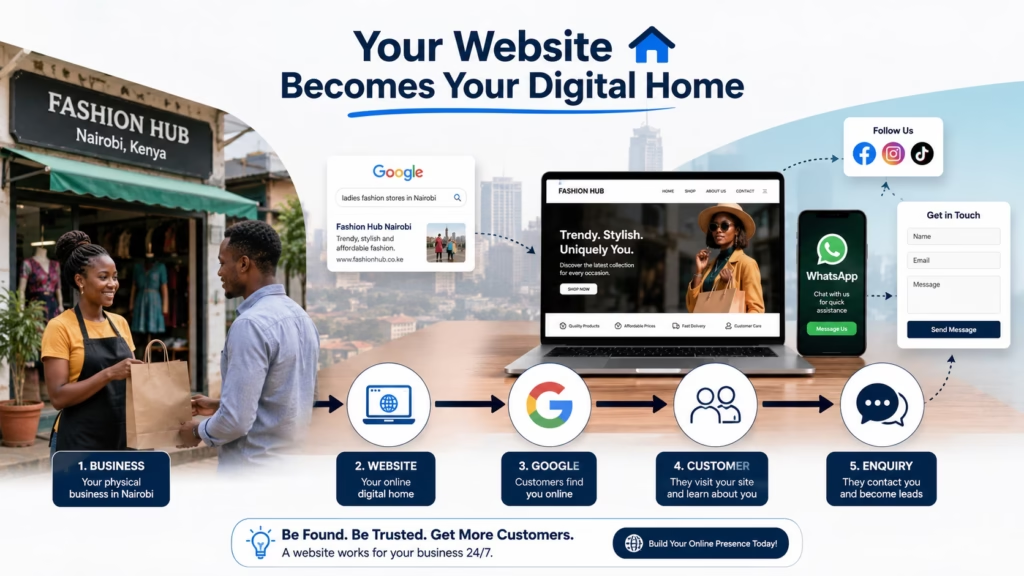
For many small businesses, having a professional website is no longer simply about looking modern. A website can help a business establish credibility, become easier to find online, present its products or services professionally, and create more opportunities for customer enquiries. Website design for small businesses in Nairobi should therefore focus not only on appearance but also on helping the business achieve practical goals.
Build Credibility and Trust
Customers often want to know whether a business is legitimate and professional before contacting or buying from it. A well-designed website can provide important information about your business, services, location, contact details, testimonials, and previous work, helping potential customers feel more confident.
Help Customers Find Your Business Online
People increasingly use Google to search for businesses, products, and services. Someone might search for terms such as “web designer Nairobi,” “interior designer Nairobi,” or “best furniture shop Nairobi.” A properly structured website can give your business an opportunity to appear in relevant search results.
Showcase Your Products and Services
A website gives you space to explain what you offer through service pages, product pages, portfolios, project galleries, and case studies. Instead of relying entirely on short social media posts, customers can explore your offerings in greater detail.
Generate Leads
Your website can encourage visitors to take action through contact forms, WhatsApp buttons, phone calls, quotation requests, and booking forms. These features can turn website visitors into potential customers.
Establish a Professional Brand
Your website brings together important elements of your brand, including your logo, colors, typography, messaging, photography, and overall visual identity. Consistency across these elements can make your business appear more professional and memorable.
Reach Customers Beyond Social Media
Facebook, Instagram, TikTok, and WhatsApp can be valuable marketing channels, but businesses should not depend entirely on platforms they do not control. Your website provides a central online home for your business, while social media can complement it by helping you reach and engage your audience.
What Types of Nairobi Small Businesses Need Websites?
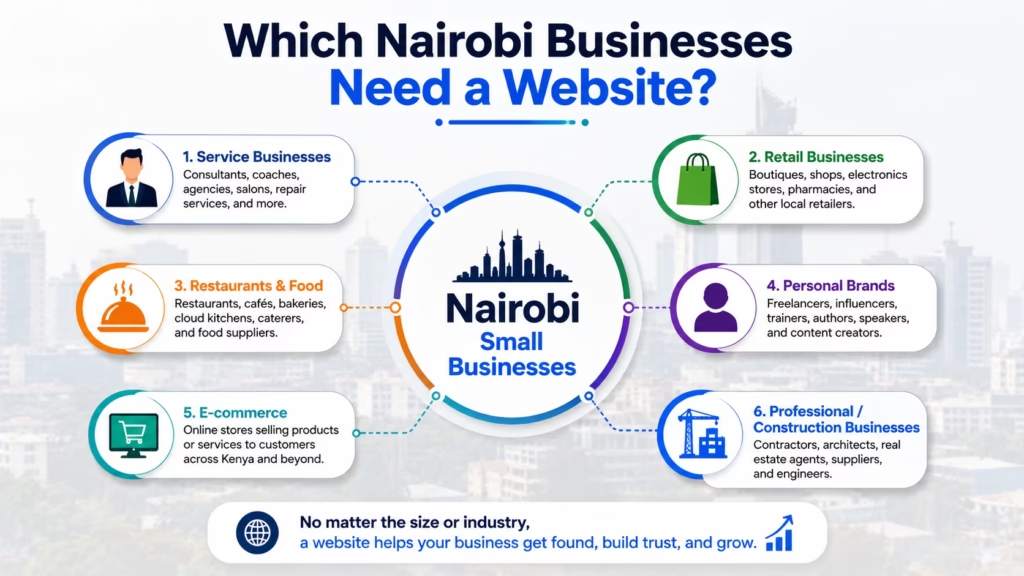
Almost any small business can benefit from having a professional website, but the type of website needed will depend on what the business does, who it serves, and what customers need to accomplish online. Website design for small businesses in Nairobi can be adapted to different industries, whether the goal is generating enquiries, showcasing work, attracting local customers, or selling products online.
Service-Based Businesses
Service businesses can use websites to explain their services, demonstrate expertise, answer common customer questions, and make it easy for potential clients to get in touch. Examples include:
- Consultants
- Accountants
- Lawyers
- Cleaning companies
- Marketing agencies
- IT companies
- Construction companies
Retail Businesses
Retail businesses can use websites to showcase products, provide essential business information, and help customers discover what they sell. Examples include furniture shops, clothing stores, electronics shops, computer shops, and beauty-product businesses.
Restaurants and Food Businesses
Restaurants and food businesses can use websites to display menus, opening information, locations, reservations, delivery options, and WhatsApp ordering instructions. A website can make it easier for customers to decide where and how to order.
Professional and Personal Brands
Coaches, trainers, freelancers, photographers, designers, and other creatives can use websites to present their expertise, personal brand, services, and previous work through professional portfolios and service pages.
E-commerce Businesses
Businesses that want to sell products online can use an e-commerce website to display product catalogs, shopping carts, checkout pages, payment options, and order-management features. WordPress combined with WooCommerce can provide a foundation for building this type of online store.
What Should a Small Business Website Include?
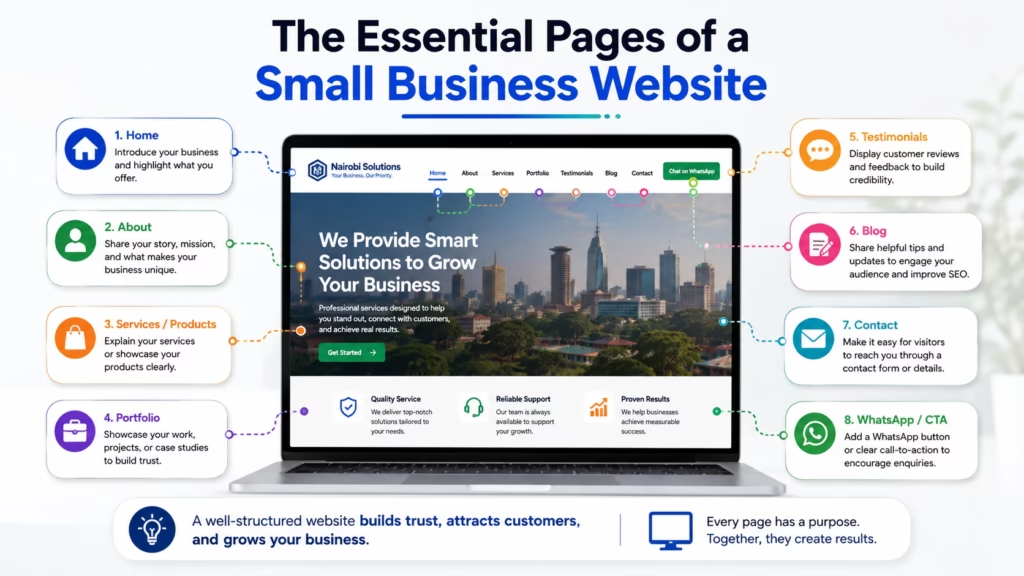
A professional business website should give visitors the information they need to understand your business, evaluate your products or services, and take the next step. Website design for small businesses in Nairobi should therefore focus on creating a clear structure that supports both the customer’s needs and the business’s goals.
1. Homepage
The homepage is often the first page visitors see, so it should quickly communicate what your business does and why customers should choose you. Include a clear headline, strong value proposition, an overview of your main services or products, social proof such as testimonials, and a clear call-to-action (CTA).
2. About Page
The About page allows visitors to learn more about your business. Explain who you are, your story, experience, mission, values, and the reasons customers should trust your business.
3. Services or Products Page
Your services or products should be presented clearly and logically. Explain what you offer, who it is for, the benefits customers can expect, and any other information they need before contacting you or making a purchase.
4. Portfolio / Our Work
A portfolio can be particularly valuable for designers, contractors, photographers, agencies, furniture businesses, and interior designers. Use projects, images, case studies, and previous work to demonstrate what your business can deliver.
5. Contact Page
Make it easy for potential customers to contact you. Include your phone number, WhatsApp contact, email address, physical location, contact form, and Google Maps where appropriate.
6. Blog / Resources
A blog or resources section can support SEO, educate your audience, demonstrate expertise, and generate leads. Publishing useful content can also give potential customers more reasons to discover and interact with your website.
7. Testimonials / Reviews
Customer testimonials and reviews provide social proof. Genuine feedback can help potential customers understand others’ experiences and build confidence when considering your products or services.
How Much Does Website Design Cost in Nairobi?
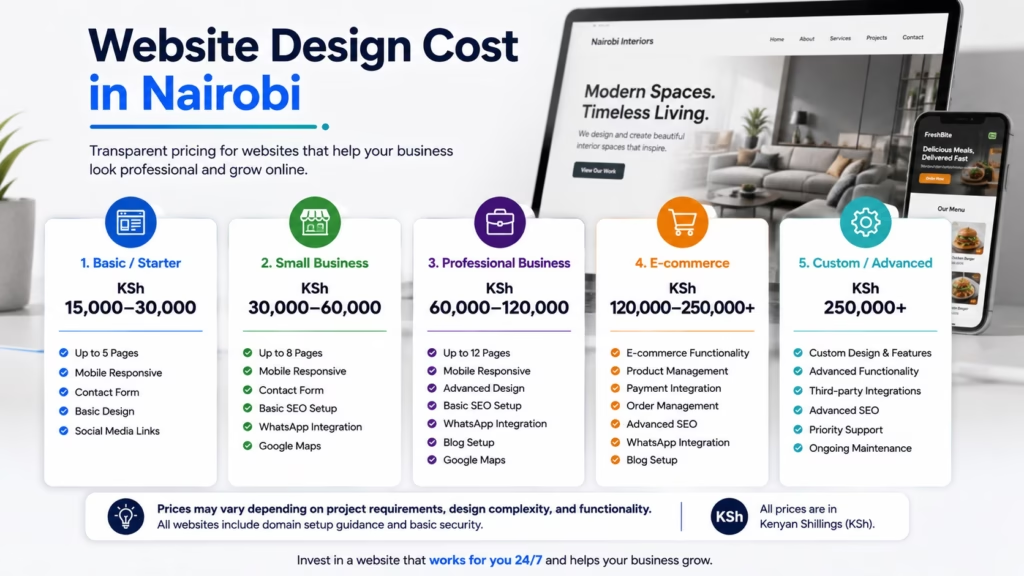
One of the most common questions business owners ask before starting a website project is, “How much does a website cost?” The answer is not as simple as giving one fixed price because every business has different requirements. The cost of website design for small businesses in Nairobi depends on the website’s size and complexity, as well as the features required to achieve the business’s goals.
Several factors can influence the overall cost, including the number of pages, design complexity, WordPress or theme choice, custom functionality, e-commerce features, content creation, SEO, hosting, domain registration, maintenance, and third-party integrations.
Basic Small Business Website
A basic small business website is suitable for a business that primarily wants to establish a professional online presence. It may include essential pages such as Home, About, Services, and Contact. Depending on the project, it can also include a WhatsApp button, contact form, social media links, and basic SEO setup.
This option can work well for a small service provider that wants customers to understand what the business offers and know how to get in touch.
Professional Business Website
A professional business website generally requires more planning, content, customization, and functionality. It may include additional service pages, a portfolio, testimonials, a blog, stronger calls-to-action, improved user experience, and more comprehensive SEO setup.
The more customized the design and functionality, the more time and resources may be required to complete the project.
E-commerce Website
An e-commerce website requires additional functionality because customers need to browse products and complete purchases online. Features may include:
- Product catalog
- Shopping cart
- Checkout
- Payment integrations
- Order management
For businesses selling products online, these requirements can make an e-commerce website more complex than a standard business website.
Ongoing Website Costs
Building the website is only part of the investment. Business owners should also consider recurring expenses such as domain renewal, hosting, maintenance, security, software updates, content updates, and integrations.
Therefore, when comparing website design packages, don’t look only at the initial price. Ask what is included, what you will need to pay separately, and what ongoing costs you should budget for.
Important: Website prices can change over time. Before publishing or purchasing a website package, confirm current Kenya-specific pricing for domains, hosting, design, maintenance, and other services.
WordPress Website Design for Nairobi Small Businesses
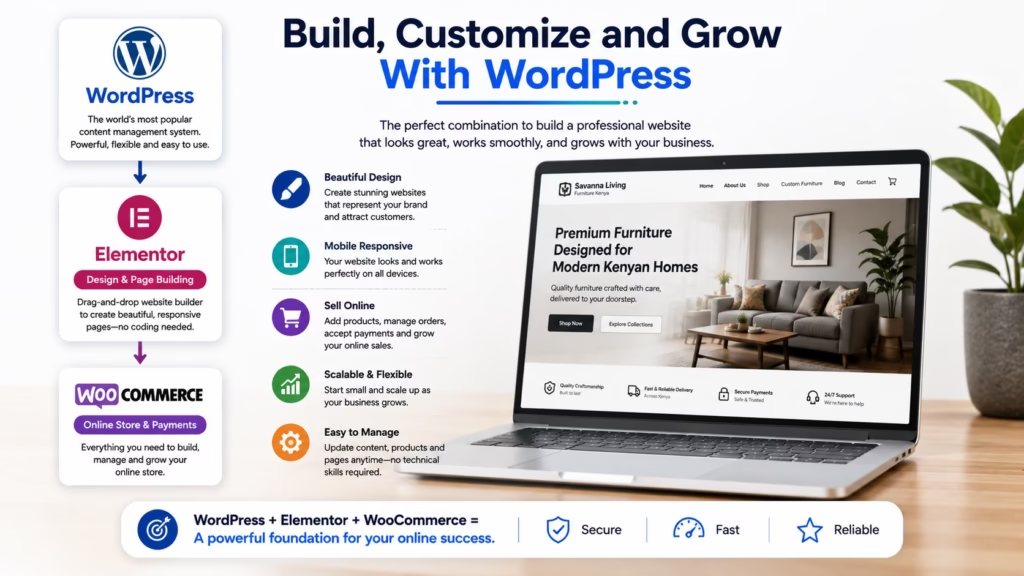
For many small businesses, choosing the right website platform is an important part of the planning process. WordPress is one option that can provide the flexibility needed to create anything from a simple business website to a more advanced online store. For businesses considering website design for small businesses in Nairobi, WordPress can be a practical choice because it supports different types of websites and can grow alongside the business.
What Is WordPress?
WordPress is a website content management system (CMS) that allows users to create, manage, and update website content without having to build every part of the website from scratch with code. A business can use WordPress to create pages, publish blog posts, add images, manage website content, and expand its website as its needs change.
Why Use WordPress for a Small Business Website?
WordPress offers several features that can make it suitable for small businesses. It is flexible, scalable, customizable, and supported by a large ecosystem of themes and plugins. It can also be configured for SEO, expanded as a business grows, and used to create e-commerce websites.
For example, a small business could begin with a simple website containing its Home, About, Services, and Contact pages and later add a blog, portfolio, booking functionality, or online store.
WordPress + Elementor
Elementor is a visual page-building tool that can help designers create professional website layouts through a visual editing experience. It can be useful when creating customized page structures, sections, calls-to-action, service presentations, and other visual elements.
WordPress + WooCommerce
For businesses that want to sell products online, WooCommerce can be used with WordPress to create an e-commerce website. It can support features such as product catalogs, shopping carts, checkout processes, payment options, and order management.
The right WordPress setup ultimately depends on the business’s goals, budget, content, functionality, and plans.
How to Choose a Website Designer in Nairobi
Choosing the right website designer is an important decision because your website represents your business online. The cheapest option is not always the best option, and an attractive website is not necessarily an effective one. When considering website design for small businesses in Nairobi, look for a designer who understands both design and the business goals behind the website.
Check Their Portfolio
Start by reviewing the designer’s previous work. Look at the design quality, variety of projects, mobile responsiveness, real client projects, and experience with relevant industries. A portfolio can help you understand whether the designer’s style and capabilities match what your business needs.
Check Their Understanding of Business Goals
A professional website designer should be interested in more than your preferred colors and images. They should ask questions about your business, target audience, competitors, and objectives.
Instead of only asking:
“What colors do you want?”
A good designer should also ask:
“What do you want the website to achieve?”
The answer could be to generate enquiries, attract Google traffic, showcase services, sell products, build credibility, or encourage customers to contact the business.
Ask About SEO
A website should be designed with search visibility in mind. Ask the designer about search engine optimization, local SEO, page structure, metadata, and website performance. These elements can help create a stronger foundation for attracting relevant visitors from search engines.
Ask About Mobile Responsiveness
Many customers access websites using smartphones. Make sure the designer can create a website that works properly across mobile phones, tablets, and desktop computers.
Ask About Website Maintenance
Find out who will handle updates, security, backups, content changes, and technical maintenance after the website launches.
Ask What Is Included in Their Package
Before agreeing to a project, ask for a clear explanation of what the package includes. Confirm details such as the number of pages, design, hosting, domain, SEO setup, forms, integrations, revisions, training, and ongoing support.
How to Prepare Before Hiring a Website Designer
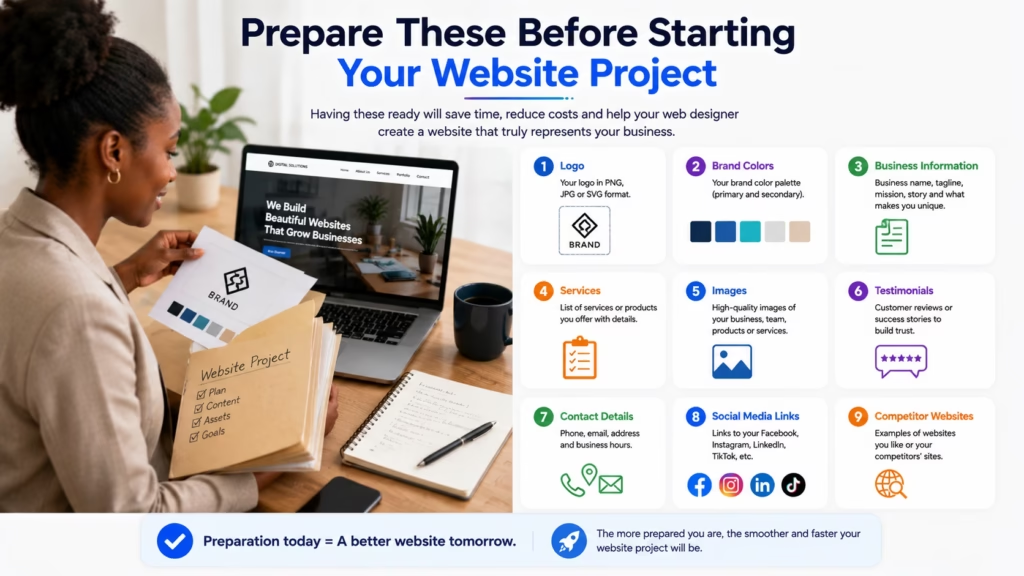
Before hiring a website designer, preparing the right information can make the project smoother, faster, and more productive. It also helps the designer understand your business and create a website that communicates your message effectively. For website design for small businesses in Nairobi, preparation is especially important because your website should reflect your business, target customers, products or services, and local market.
Start by gathering the essential information the designer will need, including:
- Business name – Your official or preferred business name.
- Logo – Provide your current logo in a high-quality format if you have one.
- Brand colors – Share your preferred brand colors and any existing brand guidelines.
- Business description – Explain what your business does and who it serves.
- Services or products – Prepare a clear list of everything you offer.
- Prices – Include prices where appropriate and where customers need them to make decisions.
- Images – Gather professional photos of your products, services, team, workplace, or previous projects.
- Testimonials – Provide genuine reviews or feedback from existing customers.
- Contact details – Prepare your phone number, WhatsApp number, email address, and other relevant contact information.
- Social media links – Provide links to your Facebook, Instagram, TikTok, LinkedIn, or other active platforms.
- Physical location – Provide your business address or service area.
- Target audience – Explain who you want to attract through the website.
- Competitor websites – Identify websites belonging to businesses you compete with or admire.
- Domain name ideas – Prepare a few possible domain names that represent your business.
Having these materials ready gives your designer a stronger foundation for planning the website and reduces unnecessary delays during the project.
How to Make Your Nairobi Business Website User-Friendly
A professional website should not only look attractive; it should also be easy for visitors to navigate and use. A user-friendly website helps customers quickly find the information they need and take action without confusion. When planning website design for small businesses in Nairobi, always consider how your target customers will interact with the website on different devices.
Keep Navigation Simple
Use a clear and straightforward navigation menu so visitors can easily find important pages such as Home, About, Services, Products, Portfolio, Blog, and Contact. Avoid overcrowding the menu with unnecessary options.
Make It Mobile-Friendly
Your website should work properly on smartphones, tablets, and desktop computers. Text should be easy to read, buttons should be easy to tap, and images and sections should display correctly on smaller screens.
Use Clear Calls-to-Action
Tell visitors what you want them to do next. Depending on your business, useful calls-to-action may include:
- Get a Quote
- Call Us
- WhatsApp Us
- Book a Consultation
- Shop Now
A clear CTA can guide visitors toward becoming enquiries, leads, or customers.
Make Contact Information Easy to Find
Don’t make customers search through several pages to find your phone number, WhatsApp contact, email address, or business location. Make important contact information easy to access.
Use Professional Images
High-quality, relevant images can help communicate your products, services, team, and previous work. Avoid using poor-quality or irrelevant images that can make the business appear less professional.
Make Pages Easy to Scan
Most visitors do not read every word on a webpage. Use short paragraphs, descriptive headings, bullet points, sufficient spacing, and clear sections to make your content easier to scan and understand.
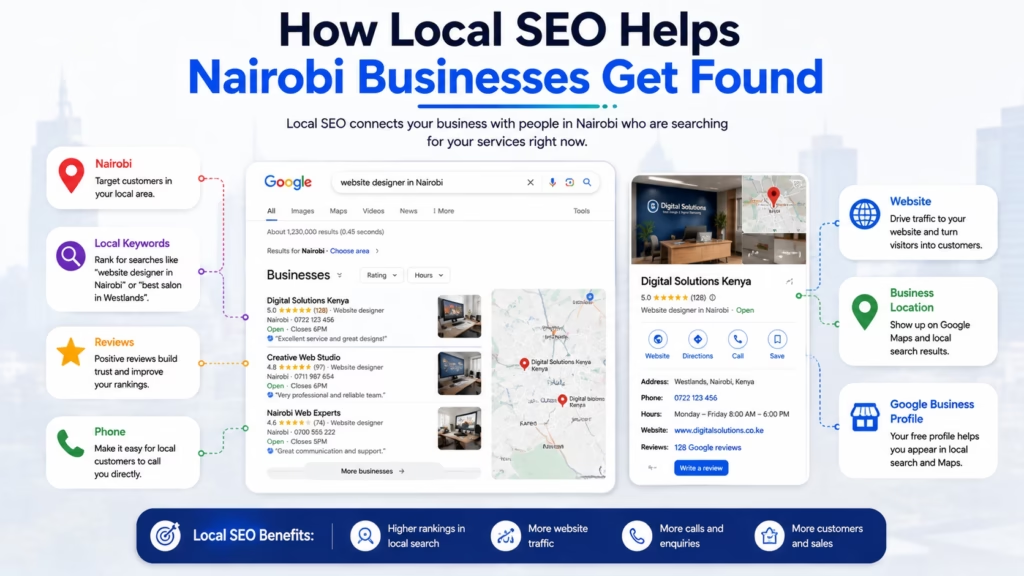
How to Optimize Your Website for Local SEO in Nairobi
Having a professional website is only part of building an online presence. You also need to make it easier for potential customers in Nairobi to discover your business when they search online. Local SEO helps businesses improve their visibility for searches connected to a particular location. When planning website design for small businesses in Nairobi, local SEO should be considered from the beginning rather than added as an afterthought.
Use Relevant Nairobi Keywords
Use keywords that accurately describe your business and the services you provide. Depending on your industry, examples could include:
- Website designer Nairobi
- Web design Nairobi
- Accountant Nairobi
- Furniture shop Nairobi
Use these phrases naturally in relevant page titles, headings, website content, and other appropriate SEO elements. Avoid repeating keywords unnecessarily.
Create Location-Relevant Content
Create useful content that is genuinely relevant to customers in Nairobi. You can discuss local customer needs, services you provide in particular areas, common questions, or topics related to your industry and location.
Optimize Your Google Business Profile
A properly maintained Google Business Profile can help customers discover important information about your business through Google Search and Maps. Keep your business details accurate and make sure your website and business profile provide consistent information.
Keep Your Business Information Consistent
Your business information should be consistent across your website and relevant online platforms. Pay particular attention to your:
- Business name
- Address
- Phone number
Consistent information makes it easier for customers to identify and contact your business.
Create Useful Local Content
Instead of creating content simply to insert keywords, publish information that answers questions your target customers actually ask. Useful local content can demonstrate expertise while attracting people searching for relevant products or services.
Collect Genuine Customer Reviews
Encourage satisfied customers to leave honest reviews about their experiences. Genuine reviews can provide social proof and help potential customers feel more confident about contacting your business.
Build Relevant Local Links and Citations
Your business can also benefit from relevant local links and citations from reputable websites, directories, industry organizations, and other legitimate local sources. Focus on quality and relevance rather than trying to obtain a large number of links.
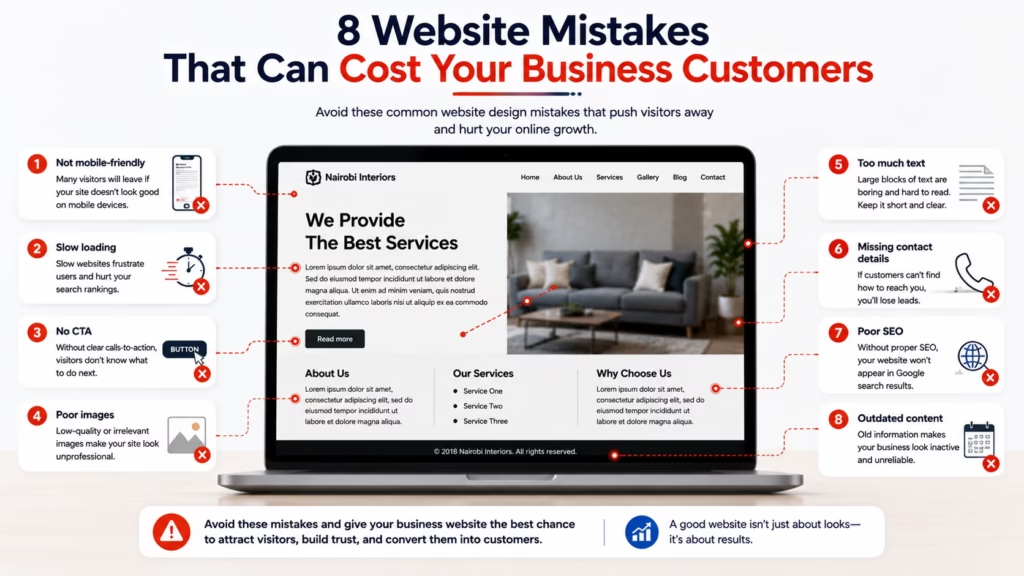
Common Website Design Mistakes Nairobi SMEs Should Avoid
Building a website is an important step for a small business, but simply having one does not guarantee results. Poor planning, weak content, or technical problems can make a website difficult to use and reduce its ability to attract and convert potential customers. When investing in website design for small businesses in Nairobi, avoiding common mistakes can help you create a more effective online presence.
1. Building a Website Without a Clear Goal
Before starting the design, determine what you want the website to achieve. Your goal could be generating enquiries, showcasing services, selling products, receiving bookings, or building credibility. Without a clear goal, the website may look attractive but fail to support your business.
2. Poor Mobile Experience
A website that works well on a desktop but is difficult to use on a smartphone can frustrate visitors. Make sure your pages, buttons, images, menus, and forms work properly across different screen sizes.
3. Too Much Text
Large blocks of text can make pages difficult to read. Break information into short paragraphs, headings, bullet points, and easy-to-scan sections.
4. Weak Homepage Messaging
Visitors should quickly understand what your business does and who you serve. A vague headline can make it difficult for potential customers to understand your value.
5. No Clear CTA
Every important page should guide visitors toward a relevant next step, such as calling, sending a WhatsApp message, requesting a quote, booking a consultation, or purchasing a product.
6. Poor-Quality Images
Blurry, irrelevant, or poorly presented images can make a business appear less professional. Use clear and relevant images that support your message.
7. Slow Loading Speed
Slow pages can create a poor user experience. Optimize images, avoid unnecessary elements, and use reliable hosting to improve website performance.
8. Missing Contact Information
Make your phone number, WhatsApp contact, email address, and location easy to find. Customers should not have to search extensively to contact your business.
9. Ignoring SEO
A website needs a basic SEO foundation if you want potential customers to discover it through search engines. Consider page structure, relevant keywords, metadata, local SEO, and useful content.
10. Never Updating the Website
Your website should evolve with your business. Update outdated information, services, prices, images, testimonials, blog content, software, and security features when necessary.
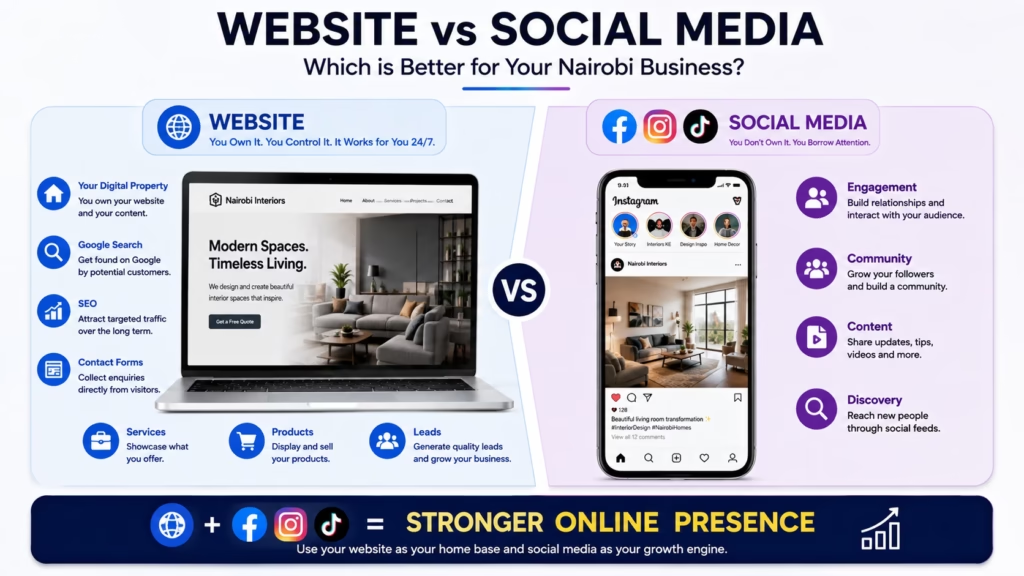
Website Design vs Social Media for Nairobi Businesses
Many Nairobi businesses use platforms such as Facebook, Instagram, TikTok, and WhatsApp to promote their products and communicate with customers. These platforms can be extremely useful, but they should not necessarily replace having a professional website. When considering website design for small businesses in Nairobi, it is helpful to understand what a website and social media each contribute to your digital presence.
| Website | Social Media |
|---|---|
| Owned digital property | Platform-controlled |
| Better control over branding | Platform-specific design |
| Can rank on Google | Primarily social discovery |
| Can generate organic search traffic | Strong for engagement |
| Can collect leads directly | Great for community |
| Can sell products and services | Depends on the platform |
A Website Gives Your Business a Digital Home
Your website acts as a central online location where customers can learn about your business, explore your services or products, read useful information, view testimonials, and find your contact details. You have greater control over how information is organized and presented.
Social media, on the other hand, is excellent for publishing updates, engaging followers, sharing visual content, and building a community. However, the experience is influenced by the platform’s design, rules, algorithms, and features.
Use Your Website and Social Media Together
The choice does not have to be website OR social media. A stronger approach is to use both.
Your website can serve as the central destination for detailed information, search visibility, lead generation, and conversions, while social media can help attract attention and engage your audience.
For example, a Nairobi furniture business could publish product content on Instagram and TikTok, communicate with customers through WhatsApp, and direct interested people to its website to view the complete product catalog, learn about the business, and make an enquiry.
The best strategy isn’t website OR social media. It’s website + social media working together.
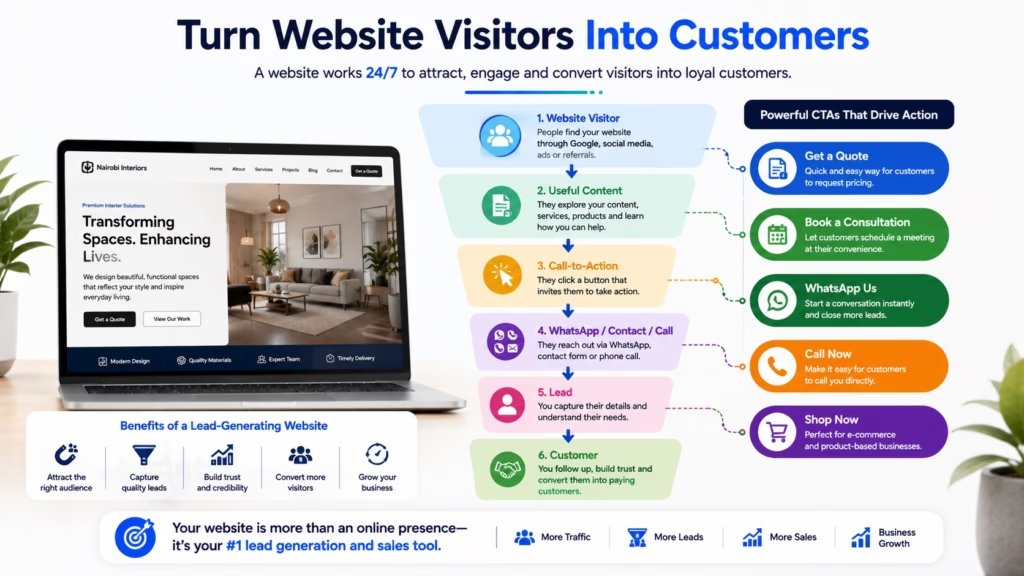
How to Turn Your Website Into a Lead Generation Tool
A professional website should do more than provide information about your business. It should help move visitors from simply discovering your business to taking meaningful action. This is why effective website design for small businesses in Nairobi should be connected to a clear lead-generation strategy.
A lead is a potential customer who shows interest in your business by taking an action such as requesting a quotation, making an enquiry, booking a consultation, or contacting you through WhatsApp.
Create Strong Calls-to-Action
Every important page should give visitors a clear next step. Use relevant calls-to-action such as Get a Quote, Book a Consultation, Call Us, WhatsApp Us, or Request More Information. Make these actions visible and easy to understand.
Add WhatsApp
WhatsApp is widely used by businesses and customers in Kenya. Adding a WhatsApp button to your website can give interested visitors a convenient way to start a conversation with your business.
Add Contact Forms
A contact form allows visitors to send enquiries directly from your website. Keep forms simple and request only information that you genuinely need, such as the visitor’s name, contact details, and enquiry.
Offer a Free Consultation or Quote
Depending on your business, offering a free consultation or quotation can encourage visitors who are interested but not yet ready to purchase to make initial contact.
Showcase Testimonials
Genuine customer testimonials can provide social proof and help reduce uncertainty for potential customers who are considering your services.
Use Case Studies
Case studies can demonstrate how you solved real customer problems. Explain the challenge, your approach, and the outcome to help potential clients understand the value you provide.
Create Valuable Blog Content
Useful blog articles can attract people searching for answers related to your products or services. They can also demonstrate expertise and provide opportunities to guide readers toward relevant services.
Track Your Leads and Website Performance
Finally, measure what happens after visitors arrive on your website. Track enquiries, form submissions, calls, WhatsApp interactions, and other important actions. This information can help you understand which pages and marketing activities are producing results and where improvements may be needed.
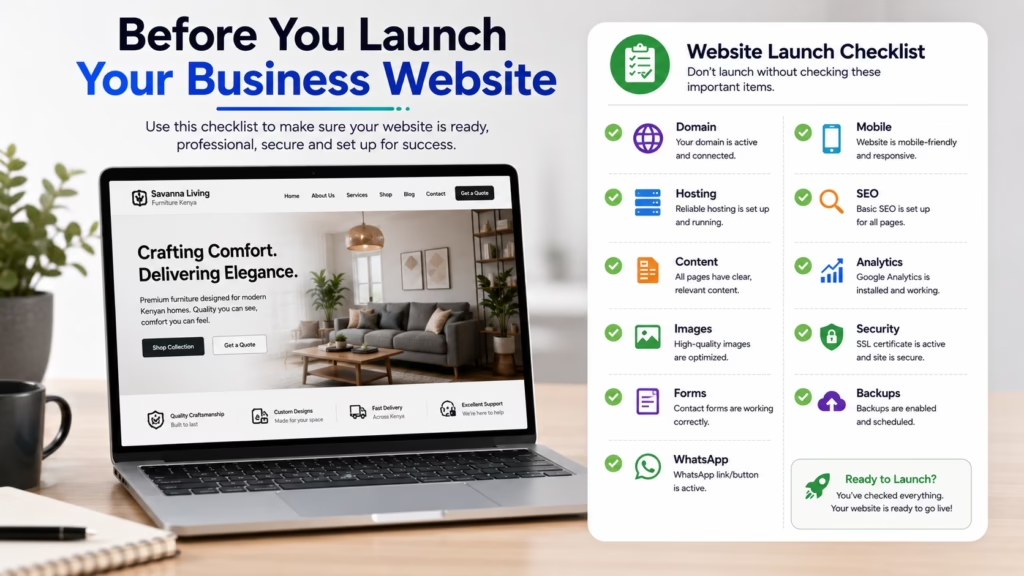
Website Launch Checklist for Nairobi SMEs
Launching a website is more than connecting a domain and publishing the pages. Before making your website available to the public, take time to test its content, functionality, responsiveness, SEO, security, and other important elements. A proper launch process can help prevent avoidable problems and create a better experience for your visitors.
Use the following checklist before launching your website:
Before Launch
- Domain connected — Confirm that your domain points to the correct website and loads properly.
- Hosting configured — Make sure your hosting environment is working correctly.
- Logo added — Check that your business logo appears correctly across the website.
- Content proofread — Review your pages for spelling, grammar, accuracy, and outdated information.
- Images optimized — Compress and properly size images to support good website performance.
- Contact forms tested — Submit test enquiries and confirm that messages are being delivered correctly.
- WhatsApp link tested — Make sure the WhatsApp button opens the intended conversation or number.
- Phone numbers tested — Verify that telephone links and displayed numbers are correct.
- Social links tested — Check that all social media links lead to the correct profiles.
- Mobile version checked — Review the website on smartphones and confirm that content and buttons display properly.
- Desktop version checked — Check the website on desktop screens for layout and usability issues.
- SEO basics configured — Review important SEO elements such as titles, descriptions, headings, URLs, and indexing settings.
- Google Analytics/measurement configured — Set up appropriate measurement tools where required.
- Google Business Profile linked where appropriate — Connect your online presence where relevant to your local business strategy.
- Website security configured — Confirm that essential security measures are in place.
- Backup system configured — Make sure a reliable backup system is available before launch.
A thorough pre-launch review is an important part of website design for small businesses in Nairobi because it helps ensure that the website is ready not only to look professional, but also to function properly for real customers.
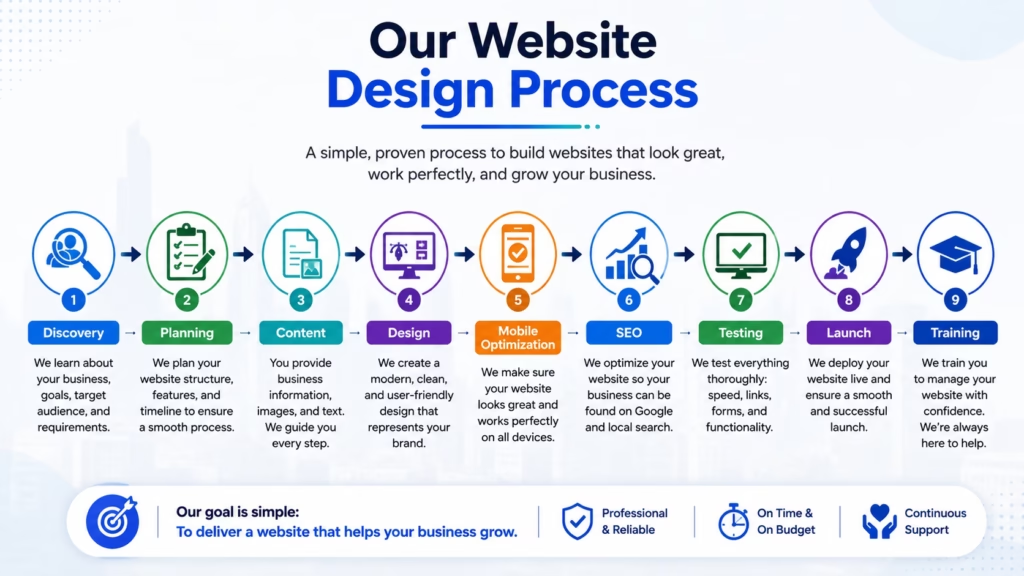
How DigitalComputerCamp Helps Nairobi SMEs Build Websites
A successful business website should be built around more than attractive colors, images, and layouts. It should communicate the business clearly, serve its target audience, and support specific business goals. At DigitalComputerCamp, our approach to website design for small businesses in Nairobi focuses on creating practical WordPress websites that help businesses establish credibility, showcase their offerings, attract potential customers, and generate enquiries.
Our website design process follows several important stages.
1. Discovery
We begin by understanding your business, target audience, goals, services or products, competitors, and what you want the website to achieve. This helps ensure that the website is designed around your business rather than simply using a generic template.
2. Planning
Next, we plan the website structure and sitemap. This determines the main pages, navigation, content organization, and journey visitors will follow when exploring the website.
3. Content
We help organize the information customers need to understand your business. This can include your business description, services, products, testimonials, contact information, and calls-to-action.
4. WordPress Design
We build the website using WordPress and create a professional layout that reflects your business and brand. The design is structured to make important information easy for visitors to find.
5. Mobile Optimization
Your website should provide a good experience across smartphones, tablets, and desktop computers. We check the layout, content, buttons, images, and navigation across different screen sizes.
6. SEO Setup
We establish the website’s basic SEO structure, including relevant page content, headings, metadata, URLs, and other foundational elements that can support search visibility.
7. Testing
Before launch, we test important elements such as forms, links, responsiveness, speed, navigation, and overall usability to identify problems that need to be fixed.
8. Launch
Once everything is ready, we connect the domain, complete the final checks, and publish the website so customers can access it online.
9. Training and Maintenance
After launch, we can help business owners understand how to manage and maintain their WordPress website. This can include updating content, managing pages, and keeping the website maintained as the business grows.
The goal is not simply to put your business online. It is to create a useful digital platform that supports your business, communicates your value, and makes it easier for potential customers to take the next step.
Frequently Asked Questions About Website Design in Nairobi
If you are considering building a website for your business, you may have questions about cost, platforms, SEO, maintenance, and the features your website should have. Here are answers to some common questions about website design for small businesses in Nairobi.
The cost varies depending on the website’s size, design complexity, functionality, content, SEO requirements, e-commerce features, hosting, domain, and maintenance. A simple business website will generally require a smaller investment than a customized e-commerce website.
The timeline depends on the project’s scope, the number of pages, the amount of content, design requirements, functionality, and how quickly the client provides the required materials. A straightforward website can be completed faster than a complex website with advanced features.
Yes. WordPress can be a practical option because it is flexible, scalable, customizable, and suitable for different types of websites. It can also be expanded as your business grows.
Yes, a website can complement your social media presence. Social platforms are useful for engagement and reaching audiences, while your website gives you a central online location for detailed information, search visibility, lead generation, and business credibility.
Yes. A properly structured and optimized website can provide opportunities to appear in relevant Google search results. However, ranking is not guaranteed and depends on factors such as content quality, SEO, relevance, competition, technical performance, and local search signals.
Yes. A domain name is your website’s address, while hosting provides the server space and infrastructure needed to make your website accessible online. Both are important parts of launching a website.
Yes. WordPress allows business owners to manage and update many types of website content. Depending on your setup and technical knowledge, you can update pages, blog posts, images, and other information yourself.
SEO is important if you want potential customers to discover your website through search engines. Basic SEO can include relevant content, page structure, titles, descriptions, headings, technical optimization, and local SEO.
Yes. A WhatsApp button or link can be integrated into a business website to give visitors a convenient way to contact the business and make enquiries.
Yes. A WordPress website can be configured to accept M-Pesa payments through appropriate payment integrations. The exact setup depends on the business model, payment requirements, and selected payment solution.
Conclusion
A professional website is more than an online brochure for a Nairobi small business. It can become your digital home, credibility tool, marketing channel, search visibility asset, and lead-generation system.
From choosing the right website platform and planning your pages to creating a mobile-friendly experience, optimizing for local SEO, adding clear calls-to-action, and maintaining your website after launch, every part of the process contributes to your online presence.
The most important thing is to build your website around your business goals and customers, rather than simply creating something that looks attractive. A well-planned website should make it easy for potential customers to understand what you offer, trust your business, find you online, and take action.
For businesses investing in website design for small businesses in Nairobi, the strongest approach is to combine a professional website with local SEO, useful content, social media, clear calls-to-action, and consistent maintenance.
Professional website + local SEO + useful content + strong CTA = stronger online presence.
Ready to Build a Professional Website for Your Nairobi Business?
Your business deserves more than just a social media page. A professional website can give you a central digital home where potential customers can discover your business, learn about your products or services, build trust in your brand, and contact you when they are ready to take the next step.
At DigitalComputerCamp, we help small businesses and entrepreneurs create professional WordPress websites designed to build credibility, showcase their services, attract relevant Google search traffic, and generate customer enquiries.
Whether you are starting from scratch or improving an existing website, the first step is understanding what your business needs and how a website can support your goals.
Ready to take your business online?
Get a Website Consultation
Let’s discuss your business, your audience, your goals, and the type of website that can help you build a stronger online presence.