

Introduction
In today’s digital marketplace, having a professional business website in Kenya is no longer just an advantage—it can be an important part of establishing credibility and reaching potential customers. Whether you run a small retail shop, professional service, consultancy, restaurant, real estate business, or growing company, your website can serve as your business’s online home.
A well-designed website allows customers to learn about your business, explore your products or services, contact you, and take the next step toward becoming a customer. However, creating a professional website involves more than choosing a template and adding a few pages.
In this guide, you will learn how to create a professional business website in Kenya, from planning and choosing a domain name to designing your pages, optimizing your website for Google, securing it, and launching it successfully.

Why Does Your Business Need a Professional Website in Kenya?
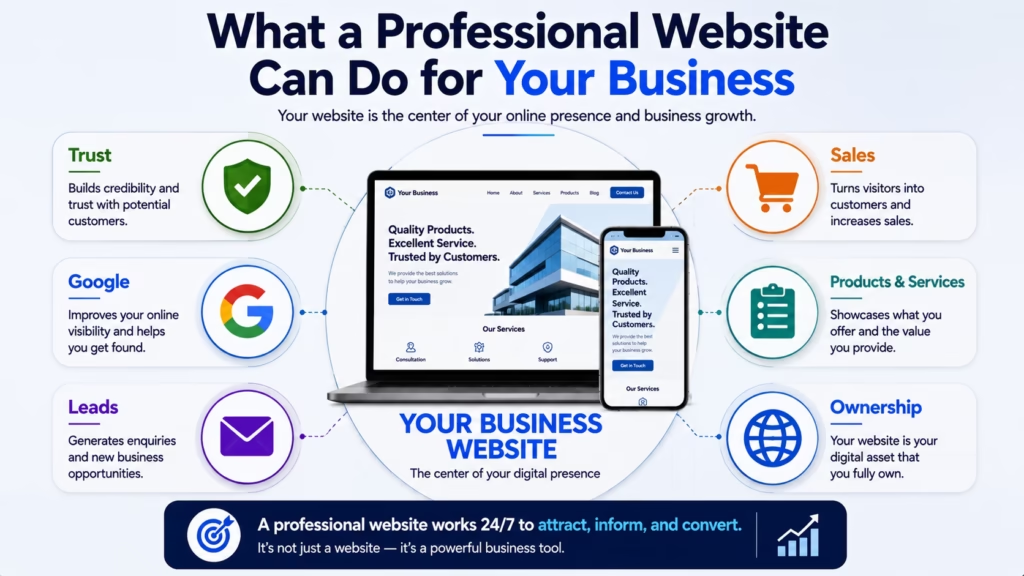
A website can be one of the most valuable digital assets for a modern business. While social media platforms can help you reach people, a website gives your business a dedicated online presence where you control the information, branding, customer experience, and calls to action.
For Kenyan businesses, this is particularly important as more customers use the internet to research businesses, compare options, find contact information, and make purchasing decisions. A professional business website in Kenya can help turn that online attention into genuine enquiries, bookings, sales, and long-term customers.
Build Credibility and Trust
Customers often want to know whether a business is legitimate and professional before spending their money. A well-designed website can provide important information about your company, including your services, location, contact details, experience, portfolio, testimonials, and frequently asked questions.
A professional appearance can also create a stronger first impression. If your website looks outdated, contains broken links, has poor-quality images, or is difficult to navigate, potential customers may question the quality of your business.
Help Customers Find Your Business Online
A website can help your business appear when potential customers search Google for products and services you offer. By optimizing your pages around relevant keywords and creating useful content, you can attract people who are actively looking for what your business provides.
For example, a Nairobi-based web designer could create pages targeting searches for website design services in Nairobi, while a local restaurant could optimize its website for searches for restaurants in its area.
Generate Leads and Enquiries
Your website should give visitors a clear next step. Depending on your business, this could be requesting a quotation, booking an appointment, sending a WhatsApp message, calling your business, filling out a contact form, or purchasing a product.
Instead of simply displaying information, your website can work as a lead-generation tool that helps move visitors from discovering your business to taking action.
Showcase Your Products and Services
A website gives you enough space to explain what you offer in greater detail. You can create dedicated service pages, product pages, portfolio sections, case studies, and testimonials to help potential customers understand why they should choose your business.
Create an Online Presence You Control
Social media is useful for marketing, but your business does not control the platform. Algorithms, policies, and features can change at any time.
Your website provides a central online destination that you can build and improve over time. You can connect it to your social media profiles, email marketing, Google Business Profile, advertising campaigns, and other digital channels.
Ultimately, the goal of a professional business website in Kenya should not simply be to “have a website.” It should be to create a reliable digital platform that builds trust, attracts the right audience, communicates your value, and makes it easy for customers to do business with you.
Step 1 — Define the Purpose of Your Business Website
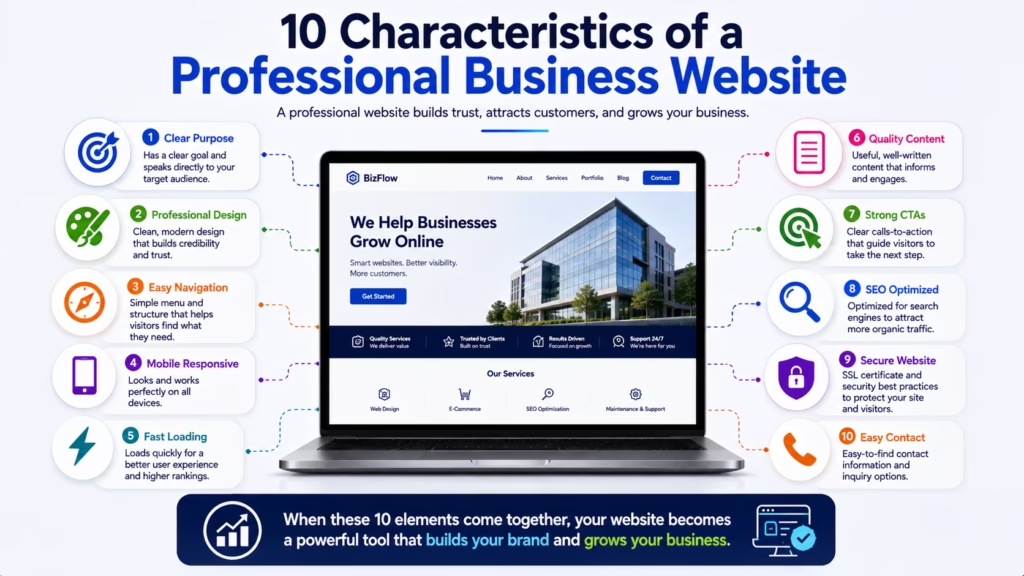
Before you choose a domain name, install WordPress, or start designing your pages, you need to understand why your business needs a website. A professional business website in Kenya should be built around a specific business objective rather than simply creating an online presence because competitors have websites.
Having a clear purpose will influence almost every decision you make, including the website structure, content, features, design, and calls to action.
Identify Your Target Customers
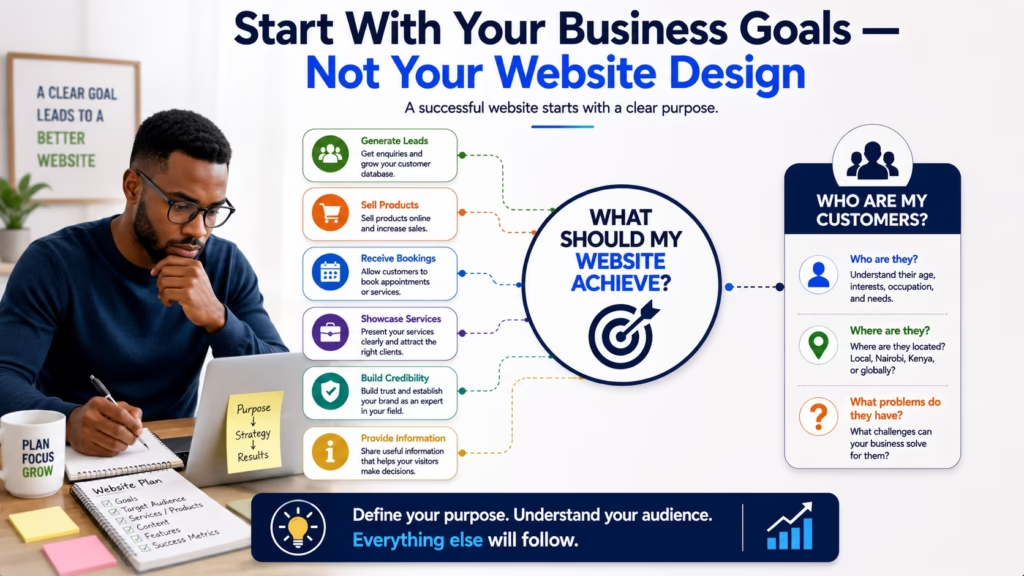
Start by identifying the people you want your website to reach. Consider their age, location, needs, interests, purchasing behavior, and the problems they are trying to solve.
For example, a Nairobi-based accounting firm may target small and medium-sized businesses looking for bookkeeping and tax services. A furniture business may target homeowners, property developers, hotels, and offices looking for furniture.
Understanding your audience allows you to create website content that speaks directly to potential customers.
Define Your Primary Website Goal
Next, determine the main action you want visitors to take. Your goal could be to:
- Generate customer enquiries
- Receive quotation requests
- Sell products online
- Accept bookings or appointments
- Showcase your services
- Build credibility
- Generate phone calls or WhatsApp enquiries
- Provide useful information to existing customers
Your website can have several objectives, but having one primary goal makes it easier to design an effective customer journey.
Determine the Type of Website You Need
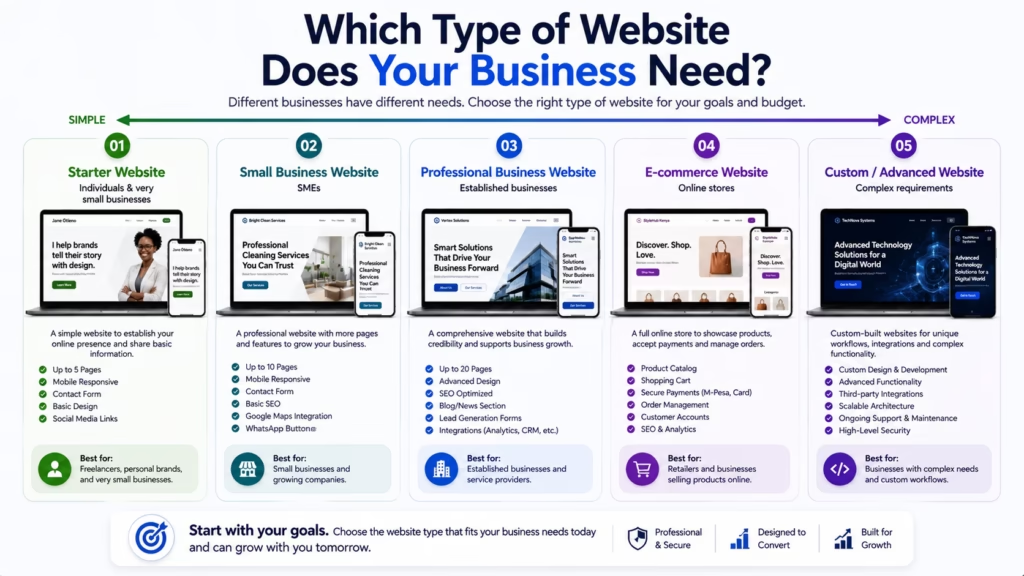
The type of website you need will depend on your business model and objectives.
A basic or starter website may be suitable for an individual or very small business that primarily needs an online presence. A small business website can provide more detailed information about services, products, and the company.
Established businesses may require a professional business website with additional pages, integrations, advanced functionality, and stronger SEO. Businesses selling products online may need an e-commerce website, while companies with complex requirements may need a custom or advanced solution.
Defining these requirements at the beginning helps you avoid paying for unnecessary features while ensuring that your website has everything needed to support your business.
Step 2 — Choose and Register a Domain Name
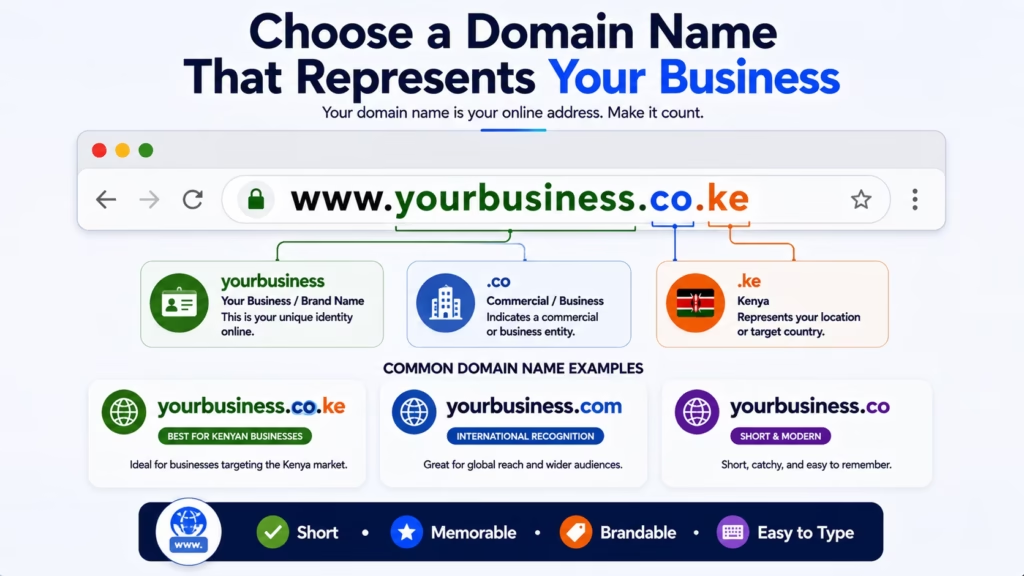
Once you know the purpose of your website, the next step is choosing a domain name. A domain name is the web address customers will type into their browser to find your business online, such as yourbusiness.co.ke or yourbusiness.com.
Choosing the right domain is an important part of creating a professional business website in Kenya because it becomes part of your brand identity.
Choose a Domain That Represents Your Business
Ideally, your domain name should be closely connected to your business name or brand. It should also be short, easy to remember, and simple to spell.
For example, if your business is called ABC Furniture, a domain such as abcfurniture.co.ke may be easier for customers to remember than a long domain containing unnecessary words or numbers.
Should a Kenyan Business Use .co.ke or .com?
The .co.ke domain extension can be a strong choice for businesses targeting customers in Kenya because it immediately communicates a Kenyan connection. A .com domain is also widely recognized and can be suitable if you plan to target customers internationally.
Your choice should depend on your target market, branding strategy, and domain availability. Some businesses may even register both versions and redirect one to the other.
Tips for Choosing a Good Domain Name
Keep these considerations in mind:
- Keep the domain relatively short.
- Make it easy to pronounce and spell.
- Avoid unnecessary numbers and hyphens.
- Choose a name that matches your brand.
- Avoid names that could be confused with another business.
- Think about how the domain will look on business cards, social media profiles, and advertisements.
- Register the domain under an account that your business can access and control.
Before registering the domain, check that the name is available and does not infringe on another company’s trademark or brand identity.
A good domain will remain associated with your business for years, so take time to choose one that can grow with your company rather than selecting a name based only on what is available today.
Step 3 — Choose Reliable Web Hosting
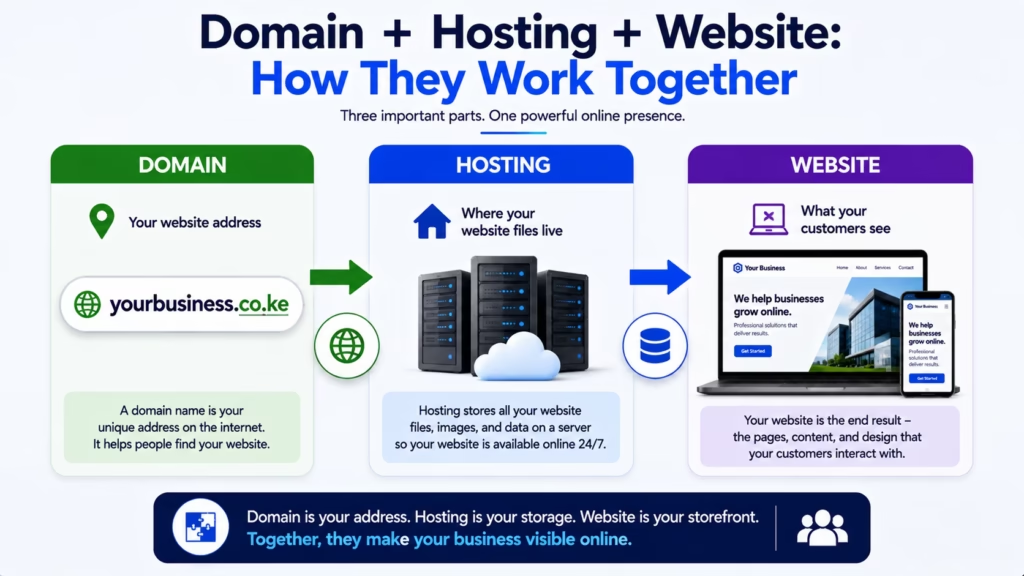
After choosing your domain name, you need web hosting. While your domain is the address people use to find your website, hosting is the service that stores your website’s files and makes them accessible online.
Choosing reliable hosting is an important part of building a professional business website in Kenya because hosting can affect your website’s speed, security, uptime, and overall performance.
What Is Web Hosting?
Think of web hosting as the physical space where your website lives online. When someone enters your domain name into a browser, the hosting server delivers your website’s files to their device.
Different hosting providers offer different packages, resources, performance levels, and support options. The right choice depends on the size and requirements of your website.
What Should You Look for in a Hosting Provider?
When comparing hosting options, consider:
- Performance: Your website should load quickly and consistently.
- SSL certificate: HTTPS helps protect information exchanged between your website and visitors.
- Backups: Regular backups can help you recover your website if something goes wrong.
- Customer support: Responsive support can be valuable when you encounter technical problems.
- WordPress compatibility: If you plan to use WordPress, choose hosting that supports it properly.
- Storage and resources: Make sure your plan can handle your website’s files, images, visitors, and functionality.
- Email hosting: Professional business email addresses can help strengthen your brand’s credibility.
- Scalability: Your hosting should allow you to upgrade as your business and website grow.
Choose Hosting Based on Your Business Needs
A small business with a few informational pages may not require the same hosting resources as a busy e-commerce store with hundreds of products.
Avoid choosing a hosting package based solely on the cheapest introductory price. Look at the features included, renewal costs, support, performance, security, and upgrade options.
For a typical small business, a reliable WordPress-compatible hosting plan can provide everything needed to launch a professional website without unnecessary complexity. As your website attracts more visitors or requires advanced functionality, you can upgrade to a more powerful hosting solution.
The goal is to choose hosting that provides a good balance of performance, reliability, security, support, and value for your specific business requirements.
Step 4 — Choose the Right Website Platform
Once you have your domain and hosting, you need to choose the platform you will use to build and manage your website. The platform you select can affect how easily you can update content, add new features, improve SEO, and scale your website as your business grows.
For many businesses, WordPress is a practical option because it provides flexibility without requiring you to build everything from scratch.
Why WordPress Is a Popular Choice for Businesses
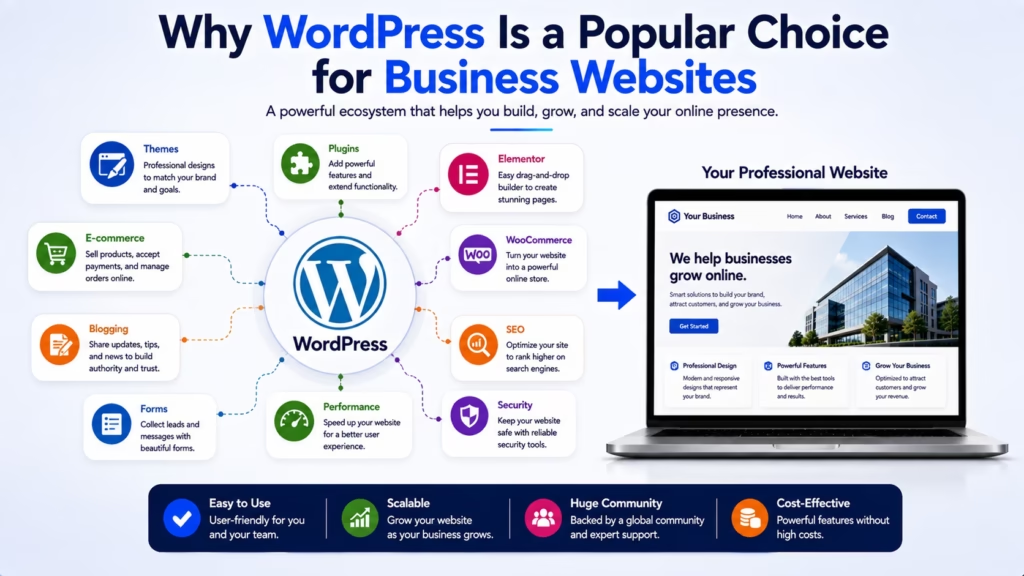
WordPress is a content management system that allows you to create and manage website content without needing advanced programming skills.
One of its biggest advantages is flexibility. You can use professionally designed themes and plugins to add functionality such as contact forms, SEO tools, image galleries, booking systems, analytics, security features, and online stores.
WordPress can also grow alongside your business. You might start with a simple five-page website and later add a blog, online store, membership area, booking system, or other functionality as your requirements change.
Another advantage is the large ecosystem of themes, plugins, developers, tutorials, and resources available to WordPress users. This makes it easier to find solutions when you need to improve or expand your website.
Other Website-Building Options
WordPress is not the only option available. Depending on your requirements, you could consider website builders, e-commerce platforms, or a custom-coded website.
Website builders can be useful for people who want a simplified website-building experience with less technical management.
E-commerce platforms can be appropriate for businesses whose primary goal is selling products online and who need specialized shopping and order-management functionality.
Custom-coded websites can provide highly specific functionality and design, but they may require a larger budget and ongoing technical support.
Which Platform Should a Kenyan Small Business Choose?
There is no single platform that is perfect for every business. Your decision should be based on your budget, technical requirements, website goals, expected growth, and the features you need.
For many Kenyan small and medium-sized businesses that need a professional online presence, service pages, a blog, contact forms, SEO capabilities, and room to expand, WordPress can be a strong choice.
The most important thing is not simply choosing a popular platform. Choose a platform that allows you to achieve your business objectives, provide a good customer experience, and maintain your website effectively over the long term.
Step 5 — Plan Your Website Structure
Before you start designing individual pages, plan the structure of your website. A clear website structure makes it easier for visitors to find information and helps search engines understand the relationship between your pages.
A professional business website in Kenya should have a logical structure that guides visitors from discovering your business to taking action.
Essential Pages Every Business Website Should Have
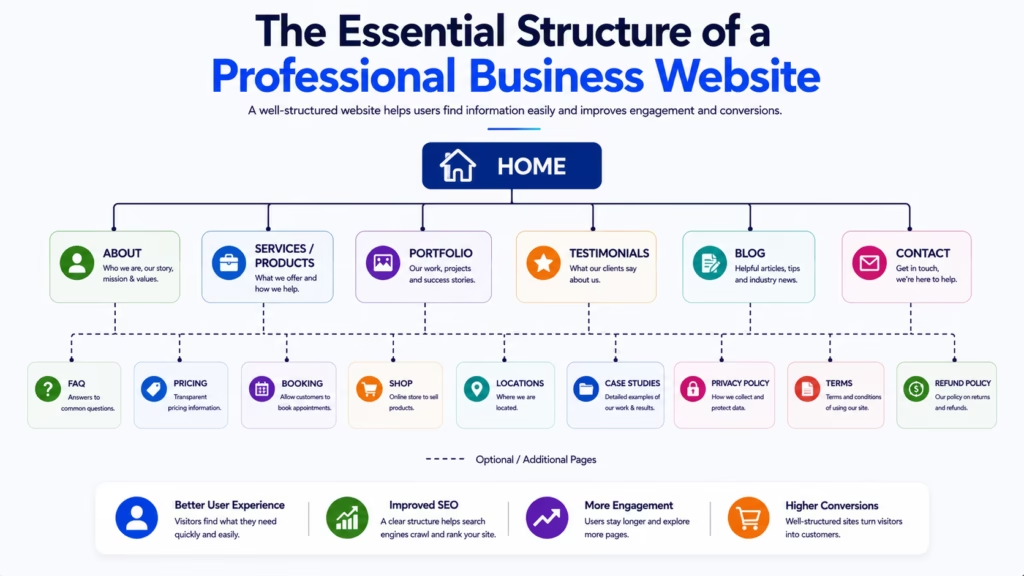
The exact pages you need will depend on your business, but most businesses should consider including the following:
1. Home Page
Your homepage introduces your business and gives visitors an overview of what you offer. It should quickly communicate who you serve, what you do, and what visitors should do next.
2. About Page
Use this page to tell visitors about your business, experience, values, team, and what makes your company different.
3. Services or Products Page
Clearly explain what you offer. If you provide multiple services, consider creating individual pages for important services so customers can find detailed information about each one.
4. Portfolio or Our Work Page
Show examples of previous projects, products, or results. This can help potential customers understand the quality of your work.
5. Testimonials or Reviews Page
Customer feedback can provide valuable social proof and help build trust with potential clients.
6. Blog or Resources Page
A blog allows you to publish educational content that answers customer questions and can support your search engine optimization strategy.
7. Contact Page
Make it easy for visitors to contact you through a form, phone number, email address, WhatsApp, or physical location where appropriate.
Additional Pages Your Business May Need
Depending on your business model, you may also need pages such as:
- FAQ
- Pricing
- Booking or appointments
- Shop
- Locations
- Case studies
- Privacy Policy
- Terms and Conditions
- Refund Policy
Do not add pages simply to make your website appear larger. Every page should serve a clear purpose for your customers or your business.
Create a Simple Navigation System
Your main navigation should contain the most important pages and remain easy to understand. Avoid overwhelming visitors with too many menu items.
You should also connect related pages using internal links. For example, a service page can link to relevant case studies, blog articles, FAQs, and your contact page.
A well-planned structure makes your website easier to navigate, improves the user experience, and creates a stronger foundation for SEO as your website grows.
Step 6 — Design a Professional Website
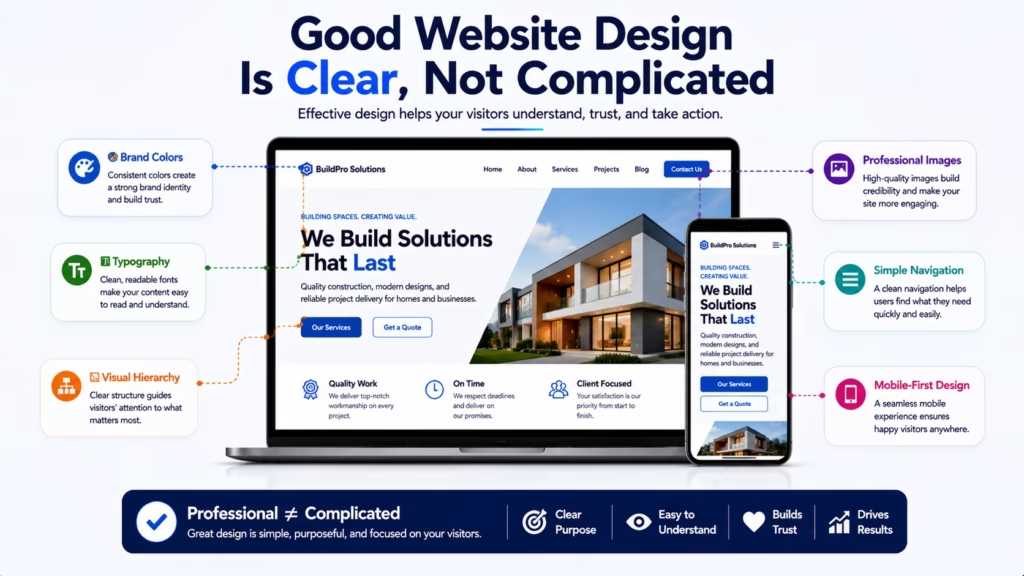
The design of your website influences how visitors perceive your business. A professional design should make your brand look credible while helping visitors find information and take action easily.
When creating a professional business website in Kenya, focus less on making the website flashy and more on creating a clean, consistent, and user-friendly experience.
Choose Your Brand Colors
Use colors that match your existing brand identity. Ideally, your website should use a consistent primary color, secondary colors, and neutral colors for backgrounds and text.
Avoid using too many colors because this can make your website look inconsistent and distract visitors from important information.
Choose Appropriate Typography
Your fonts should be easy to read on both desktop and mobile devices. Use a limited number of font families and establish a clear hierarchy between headings, subheadings, body text, and buttons.
Large, clear headings can help visitors quickly scan your content, while comfortable body text makes longer sections easier to read.
Use Professional Images
Images can communicate information faster than text and help visitors understand your products, services, team, or previous work.
Whenever possible, use high-quality original photographs or properly licensed images. For product-based businesses, clear product photography is particularly important.
Avoid filling your website with random stock images that have little connection to your business.
Create a Clear Visual Hierarchy
Important information should stand out. Use headings, spacing, contrasting elements, buttons, and sections to guide visitors through each page.
For example, your homepage could follow a simple structure:
Headline → Value proposition → Call to action → Services → Benefits → Testimonials → About the business → Final call to action
This gives visitors a logical path through your content.
Keep Navigation Simple
A professional website should not make visitors work to find what they need. Keep your menus straightforward and make important pages accessible from the main navigation.
Your logo should normally link back to the homepage, while your contact information and primary call-to-action should be easy to find.
Design for Mobile Devices
Do not design only for desktop computers. Your pages should adapt to smartphones and tablets, with readable text, appropriately sized images, accessible buttons, and menus that work well on smaller screens.
Keep the Design Simple
Professional design does not mean adding animations, pop-ups, sliders, and decorative elements everywhere. Every design element should have a purpose.
A clean layout with consistent branding, good spacing, strong typography, quality images, and clear calls to action can often create a more professional impression than an overly complicated design.
The goal is to create a website that looks trustworthy, communicates your brand effectively, and helps visitors move naturally toward becoming customers.
Step 7 — Write High-Quality Website Content
A professional website needs more than an attractive design. The words on your pages should clearly communicate what your business does, who you serve, the problems you solve, and why customers should choose you.
When creating a professional business website in Kenya, write content for your target customers first and search engines second. Your content should be useful, easy to understand, and naturally include relevant keywords.
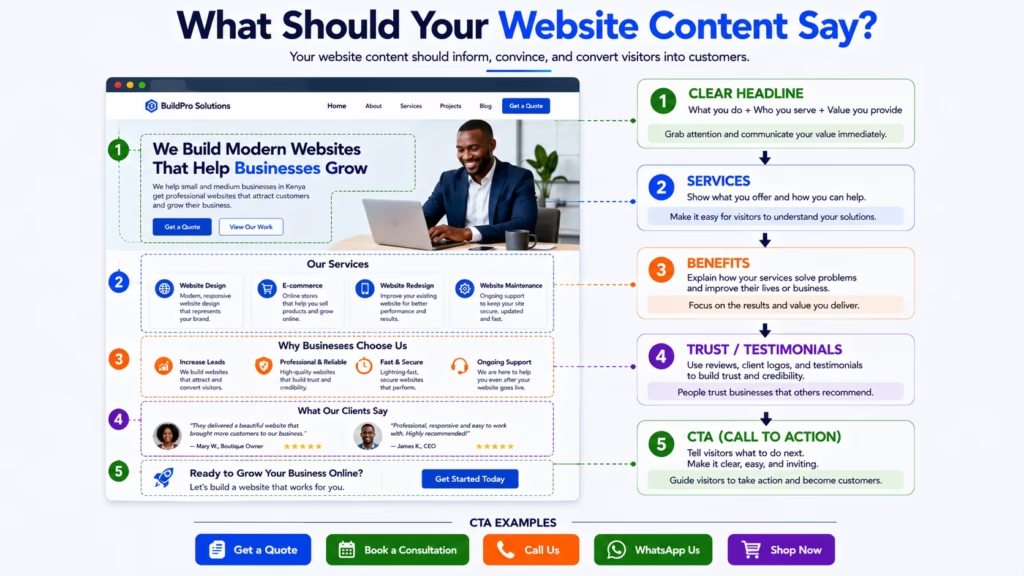
Write a Clear Homepage Headline
Your homepage is often the first page a potential customer sees. Within a few seconds, visitors should understand what your business offers and who it serves.
Instead of using a vague headline such as “Welcome to Our Website,” use a specific statement that communicates your value.
For example:
Professional Website Design for Small Businesses in Kenya
Follow your headline with a short explanation of your service and a clear call to action such as Get a Quote, Book a Consultation, or Contact Us.
Create Detailed Service Pages
Each major service should have enough information to help potential customers understand what you offer.
A strong service page can include:
- A clear service description
- The problem the service solves
- Key benefits
- What is included
- Your process
- Frequently asked questions
- Testimonials or examples
- Pricing information where appropriate
- A clear call to action
Creating dedicated pages for important services can also create additional opportunities to target relevant search terms.
Use Clear Calls to Action
Do not make visitors guess what they should do next. Include relevant calls to action throughout your website.
Examples include:
- Get a Free Quote
- Book a Consultation
- Call Us Today
- Chat With Us on WhatsApp
- Request a Service
- Shop Now
- Book an Appointment
Your call to action should match the visitor’s stage in the buying process.
Add Trust-Building Content
Potential customers want evidence that your business can deliver what it promises. Include content that demonstrates your experience and credibility.
Useful trust signals include:
- Customer testimonials
- Reviews
- Portfolio projects
- Case studies
- Certifications
- Awards
- Client logos
- Team information
- Business location and contact details
Only include genuine claims and authentic customer feedback.
Make Your Content Easy to Read
Avoid large blocks of text. Break your content into short paragraphs, headings, bullet points, and sections that make the page easy to scan.
Use simple language that your customers understand rather than filling your website with unnecessary technical terms.
Most importantly, every page should answer a customer’s questions and move them closer to taking action.
High-quality website content combined with professional design gives your website a stronger chance of attracting the right visitors, building trust, and converting those visitors into customers.
Step 8 — Add Essential Business Website Features
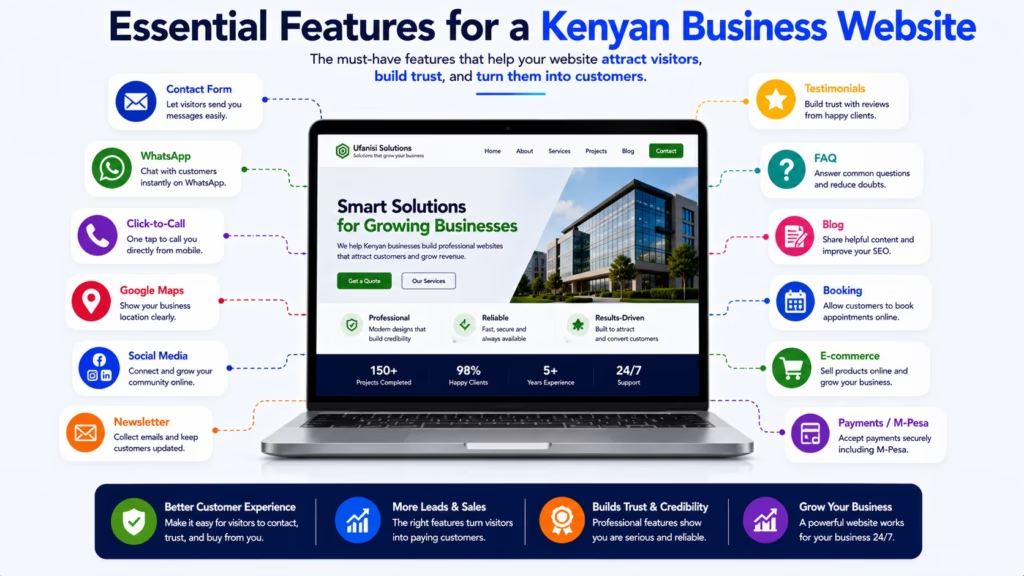
Once your website structure, design, and content are ready, you need to add the features that help visitors interact with your business. The right features depend on what your business does, but a professional business website in Kenya should make it easy for customers to get information and take action.
Avoid adding features simply because they are popular. Every feature should solve a real customer or business need.
Contact Form
A contact form gives visitors a convenient way to send enquiries without having to open another application. Keep your form simple and request only the information you actually need.
For example, you might ask for the visitor’s name, email address, phone number, service they are interested in, and a short description of their enquiry.
WhatsApp Integration
WhatsApp can be particularly useful for businesses that communicate with customers through messaging. A WhatsApp button can allow visitors to start a conversation directly from your website.
Make the button easy to find without allowing it to interfere with the user’s experience, especially on mobile devices.
Click-to-Call Phone Number
If phone calls are important to your business, make your phone number clickable on mobile devices. A visitor should be able to tap the number and immediately begin a call.
You can also display your business hours so customers know when they are likely to receive a response.
Google Maps and Location Information
Businesses with physical premises should make it easy for customers to find them. You can include your address, operating hours, directions, and an embedded map where appropriate.
This is particularly useful for shops, offices, restaurants, clinics, hotels, and other location-based businesses.
Social Media Links
If your business actively uses platforms such as Facebook, Instagram, TikTok, LinkedIn, or YouTube, link your website to those profiles. This allows visitors to explore your other content and follow your business.
However, your website should remain useful even if visitors do not use social media.
Newsletter Signup
A newsletter signup can help you build an email audience that you can communicate with directly. You could use it to share new blog posts, offers, announcements, educational content, or product updates.
Always explain what subscribers will receive and handle their information responsibly.
Testimonials and Reviews
Displaying genuine customer feedback can strengthen trust. Place relevant testimonials near services, products, or calls to action where they can support the visitor’s decision.
FAQ Section
Frequently asked questions can reduce uncertainty and help customers find answers without contacting your business. FAQs can also address common concerns about pricing, delivery, payment, timelines, services, or policies.
Online Booking
Businesses such as consultants, trainers, salons, hotels, and professional service providers may benefit from an online booking system. Customers can select an available time instead of having to arrange every appointment manually.
E-Commerce Functionality
If you sell products online, your website may need product listings, shopping carts, checkout functionality, order management, delivery information, and payment options.
For Kenyan businesses, you should consider which payment methods your customers actually use. Depending on the business model, this may include M-Pesa and other suitable payment gateways.
The key is to select features based on your customers and business objectives. A smaller website with the right features can be much more effective than a complicated website filled with functions that visitors never use.
Step 9 — Optimize Your Business Website for Google
Creating a website is only the beginning. If potential customers cannot find your business when they search online, your website may not generate the traffic and enquiries you expect.
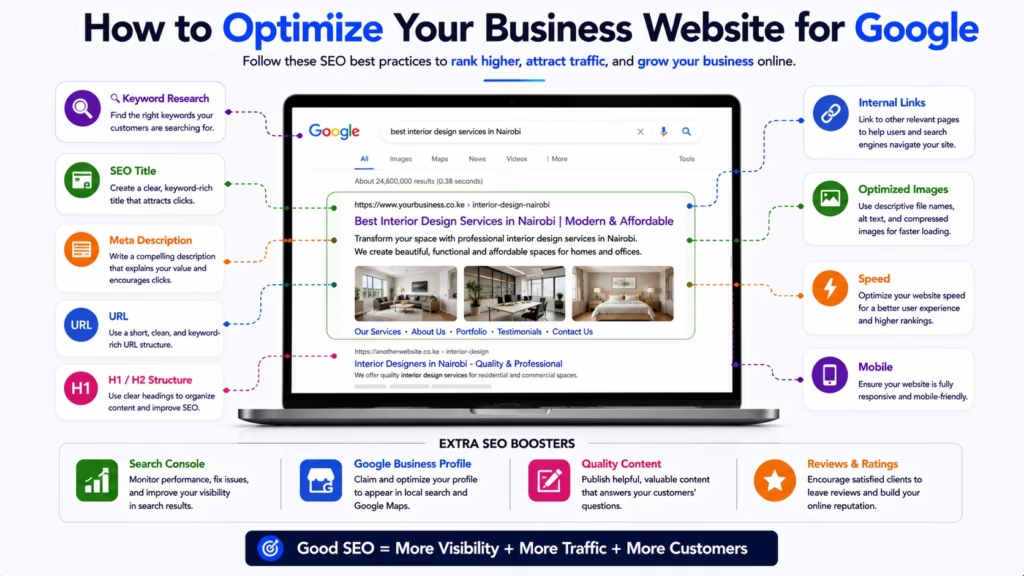
Search engine optimization (SEO) involves improving your website so that search engines can better understand your content and users can find relevant pages through search results. For a professional business website in Kenya, SEO should be considered from the planning stage rather than added as an afterthought.
Perform Keyword Research
Start by identifying the words and phrases your potential customers use when searching for your products or services.
For example, a web design company targeting Kenyan businesses might research terms such as:
- Business website design Kenya
- Website design company in Nairobi
- Professional business website in Kenya
- WordPress website design Kenya
- E-commerce website design Kenya
Choose keywords that are relevant to your services and create useful content around them. Avoid forcing keywords into your pages simply to increase keyword density.
Optimize Page Titles and Meta Descriptions
Every important page should have a descriptive SEO title that explains what the page is about. Your meta description should provide a concise summary that encourages searchers to click through to your website.
For example, a service page could have a title describing the specific service and location it serves rather than using a generic title such as “Services.”
Use Descriptive URLs
Keep your URLs short, readable, and relevant to the page.
For example:
Yourbusiness.com/web-design/
is easier to understand than a URL containing random numbers or unnecessary parameters.
Optimize Your Headings
Use a logical heading structure. Your main page topic should have an H1 heading, while related sections should use H2 and H3 headings where appropriate.
Headings should help both visitors and search engines understand the structure of your content.
Create Useful Content
Publishing helpful articles can allow your business to answer questions potential customers are searching for. For example, a Kenyan web design company could publish guides about website costs, website maintenance, SEO, WordPress, e-commerce, and digital marketing.
Focus on providing genuinely useful information rather than producing content solely to insert keywords.
Optimize Images
Large, unoptimized images can slow down your website. Resize and compress images before uploading them, use appropriate file formats, and provide descriptive alternative text where it is useful.
Image optimization can improve page performance and make your website more accessible.
Improve Website Speed
Page speed affects user experience. Review your hosting, images, plugins, caching, scripts, and other resources that may be slowing your website down.
A faster website makes it easier for visitors to browse your content, particularly when they are using mobile devices or slower internet connections.
Make Your Website Mobile-Friendly
Search engines consider the mobile experience when evaluating websites. Make sure your pages work properly on smartphones and tablets, with readable text, accessible buttons, and easy navigation.
Set Up Google Search Console
Google Search Console can help you monitor how your website appears in Google Search. It can provide information about search queries, indexing, pages, and potential technical issues.
Submit your sitemap and monitor the platform after launching your website so that you can identify opportunities and problems.
Create and Optimize Your Google Business Profile
If your business serves customers in a specific location, a Google Business Profile can complement your website and help customers find important information such as your address, phone number, opening hours, reviews, and website.
SEO is a long-term process. Instead of expecting immediate rankings, consistently publish useful content, improve your website experience, build relevant authority, and keep your business information accurate.
When SEO is built into your website from the beginning, your professional business website in Kenya has a stronger foundation for attracting relevant organic traffic and turning search visitors into potential customers.
Step 10 — Make Your Website Mobile-Friendly
A large number of potential customers may discover and interact with your business using smartphones. For this reason, a professional business website in Kenya should provide a smooth experience across mobile phones, tablets, laptops, and desktop computers.
Mobile responsiveness means that your website automatically adapts its layout and content to different screen sizes. Visitors should not have to zoom in, scroll horizontally, or struggle to tap buttons when using a smartphone.
Why Mobile Responsiveness Matters
A customer may find your business through Google, social media, an online advertisement, or a shared WhatsApp link and immediately open your website on their phone.
If the website takes too long to load, has tiny text, broken layouts, or difficult navigation, the visitor may leave before contacting your business.
A mobile-friendly website can therefore contribute to a better user experience and make it easier for visitors to explore your services and take action.
Common Mobile Design Mistakes
When testing your website, look out for problems such as:
- Text that is too small to read
- Buttons that are difficult to tap
- Menus that do not work correctly
- Images extending beyond the screen
- Slow-loading pages
- Large pop-ups covering important content
- Excessive animations
- Forms that are difficult to complete
- Horizontal scrolling
These issues can make even a visually attractive website frustrating to use.
How to Test Your Website on Mobile
Do not rely only on your website builder’s responsive preview. Test the actual website on different smartphones and browsers.
Open your main pages and check the homepage, service pages, contact forms, menus, buttons, images, and checkout or booking processes if applicable.
Ask yourself a simple question: Can a customer accomplish everything they need to do without frustration on a smartphone?
If the answer is no, make improvements before launching or promoting the website.
Mobile responsiveness should not be treated as an optional extra. It should be a fundamental part of creating a professional business website in Kenya that serves customers effectively across different devices.
Step 11 — Secure Your Business Website
Website security should be considered from the beginning of your project, not after your website has already experienced a security problem. A secure website helps protect your business, your customers, and the information handled through your website.
When building a professional business website in Kenya, implement basic security measures and keep them maintained after launch.
Install an SSL Certificate
An SSL certificate enables your website to use HTTPS instead of HTTP. You can identify a secure website by the padlock displayed in most modern browsers.
HTTPS helps encrypt information exchanged between visitors and your website and is especially important when users submit contact forms, create accounts, or make payments.
Use Strong Passwords
Protect your WordPress administrator account, hosting account, domain account, and business email accounts with strong, unique passwords.
Avoid using simple passwords based on your business name, phone number, or other information that could be easy to guess.
Where available, enable two-factor authentication (2FA) to add another layer of protection to important accounts.
Keep WordPress and Plugins Updated
Outdated WordPress versions, themes, and plugins can create security and compatibility problems. Regularly check for available updates and apply them carefully.
Before making significant updates, maintaining a recent backup gives you an additional recovery option if something goes wrong.
Create Regular Backups
Backups can help you restore your website after accidental changes, technical problems, malware incidents, or other unexpected issues.
Your backup strategy should ideally include regular automated backups and a reliable location where backup copies can be recovered when needed.
Use Security Tools Where Appropriate
Depending on your website requirements, you can use reputable security tools to help monitor suspicious activity, protect login pages, reduce spam, and identify potential threats.
However, installing too many plugins can create unnecessary complexity. Choose tools based on your actual security needs and keep them maintained.
Protect Your Contact Forms From Spam
Public forms can attract spam submissions. Use appropriate anti-spam measures and avoid collecting information you do not actually need.
If your website collects personal information, make sure you clearly explain how that information is handled and provide appropriate privacy information.
Create Important Legal Pages
Depending on your business and how your website operates, you may need pages such as a Privacy Policy, Terms and Conditions, and Refund Policy.
These pages can explain important rules and practices governing your website and customer interactions.
Security does not end when your website goes live. Regular updates, backups, monitoring, and good account-management practices are essential for keeping a professional business website in Kenya reliable and secure over time.
Step 12 — Test Your Website Before Launch
Before announcing your website to customers, take time to test every important part of it. A website can look complete while still containing broken links, missing images, form errors, or mobile display problems.
A thorough pre-launch review helps ensure that your professional business website in Kenya provides a reliable experience from the moment visitors arrive.
Check Every Page
Go through your website page by page. Check that the content is accurate, headings are properly formatted, images are displaying correctly, and there are no unnecessary placeholder texts.
Pay particular attention to your homepage, service pages, contact page, and any pages that generate leads or sales.
Test Your Navigation
Click every item in your main menu and footer navigation. Make sure visitors can easily move between related pages and return to important sections of the website.
Also check internal links within your content and replace or remove any broken links.
Test Contact Forms
Submit every contact form yourself to confirm that:
- The form can be submitted successfully.
- Required fields work correctly.
- Visitors receive an appropriate confirmation message.
- Notifications reach the correct business email address.
- The submitted information is captured correctly.
If your website uses WhatsApp, phone calls, booking systems, or other enquiry methods, test those as well.
Check Mobile Responsiveness
Open your website on smartphones and tablets. Check menus, buttons, images, forms, headings, and page layouts.
Make sure visitors do not have to zoom in or scroll horizontally to read your content.
Check Website Speed
Test your key pages for performance and identify unnecessarily large images, scripts, plugins, or other resources that could slow the website down.
Proofread Your Content
Spelling and grammar mistakes can make your business appear less professional. Review all important pages carefully and make sure your business name, phone numbers, email addresses, prices, locations, and operating hours are accurate.
Verify SEO Settings
Before launch, review your page titles, meta descriptions, URLs, headings, image alt text, internal links, and sitemap. Make sure important pages are not accidentally blocked from search engines.
Verify Security and SSL
Confirm that your website loads using HTTPS and that there are no browser security warnings.
Once everything has been tested, make a final review from the perspective of a potential customer. Ask whether someone who has never heard of your business could quickly understand what you offer, trust your business, and know how to contact you.
A careful testing process can prevent small technical problems from damaging the first impression of your professional business website in Kenya.
How Much Does It Cost to Create a Professional Business Website in Kenya?
One of the first questions many business owners ask is: “How much does a professional business website cost in Kenya?” There is no single price because the total cost depends on the website’s size, design, functionality, content, integrations, and the level of expertise involved in building it.
A simple informational website for a small business will generally require a smaller investment than a large e-commerce store or a custom website with advanced functionality.
Typical Business Website Costs in Kenya
The following ranges can provide a general starting point when planning your budget:
| Website Type | Typical Cost Range | Best For |
|---|---|---|
| Basic/Starter Website | KSh 15,000–30,000 | Individuals and very small businesses |
| Small Business Website | KSh 30,000–60,000 | Small and medium-sized businesses |
| Professional Business Website | KSh 60,000–120,000 | Established businesses |
| E-commerce Website | KSh 60,000–150,000+ | Businesses selling products online |
| Custom/Advanced Website | KSh 150,000+ | Businesses requiring complex functionality |
These figures are general estimates rather than fixed industry prices. The final cost should be determined by the specific requirements of your project.
What Affects the Cost of a Business Website?
Several factors can increase or decrease the overall project cost.
Number of pages: A five-page website will usually require less work than a website containing dozens of pages.
Design complexity: A customized design created specifically around your brand may require more time than a website built using a relatively simple template.
Content creation: If you need professional copywriting, photography, graphics, product descriptions, or other content created for you, these services can add to the project cost.
E-commerce functionality: Online stores require additional features such as product management, shopping carts, checkout systems, order management, delivery options, and payment integration.
Payment integration: Businesses that accept online payments may need integrations with appropriate payment gateways.
Custom functionality: Booking systems, membership areas, calculators, directories, advanced forms, dashboards, and other custom features can require additional development work.
SEO: Professional keyword research, on-page optimization, technical SEO, and content strategy can increase the investment but may help the website attract relevant organic traffic over time.
Don’t Choose a Web Designer Based on Price Alone
The cheapest website option is not always the best option for your business. A website that looks inexpensive initially can become costly if it is difficult to maintain, poorly optimized, insecure, or unable to support your business as it grows.
When comparing web designers or agencies, consider their:
- Portfolio and previous work
- Experience
- Design and development process
- Communication
- SEO knowledge
- Security practices
- Support after launch
- Maintenance options
- Ability to understand your business objectives
Think about the website as a business investment, not simply an expense. A well-planned website can help you attract customers, generate enquiries, showcase your work, sell products, and strengthen your brand.
Before agreeing to a price, ask exactly what is included. Find out whether the package covers domain registration, hosting, design, content, SEO, SSL, revisions, training, maintenance, and other services. A clear scope helps prevent misunderstandings between you and your web designer.
Ultimately, the right budget for a professional business website in Kenya depends on what you need the website to accomplish. Start with your business goals and required functionality, then choose a solution that provides the best balance between quality, functionality, and long-term value.
How Long Does It Take to Build a Business Website in Kenya?
The time required to build a business website in Kenya depends on its size, complexity, functionality, and how quickly the client provides content and feedback. A simple website with a few pages can often be completed much faster than an e-commerce store or custom website.
Basic Business Website
A basic website with several pages, contact information, and simple functionality may take around 1–2 weeks, depending on the project requirements and content availability.
Small Business Website
A more comprehensive small business website with multiple service pages, custom design, SEO setup, forms, and integrations may take approximately 2–4 weeks.
E-Commerce Website
An online store can take longer because products, categories, payment systems, delivery options, checkout processes, and order management need to be configured and tested. Depending on the scope, an e-commerce project may take 3–8 weeks or longer.
Custom or Advanced Website
Websites requiring custom functionality, complex integrations, membership systems, or advanced features can take several weeks or months.
Keep in mind that the designer is not always responsible for delays. Missing content, slow feedback, frequent design changes, domain or hosting issues, and delayed approvals can extend the timeline.
Before development begins, agree on the project scope, milestones, responsibilities, and expected completion date. This makes it easier for both the business owner and designer to stay on track and launch the professional business website in Kenya on schedule.
Should You Build Your Business Website Yourself or Hire a Professional?
Once you decide that your business needs a website, you have another important decision to make: should you build it yourself or hire a professional web designer?
There is no universal answer. The right option depends on your budget, technical skills, available time, and the complexity of the website you need.
Building a Website Yourself
A DIY website can be a reasonable option for individuals and very small businesses with limited budgets. Platforms such as WordPress and website builders allow beginners to create websites using pre-designed themes and visual editors.
The main advantage is cost. You can learn new skills while reducing the amount you initially spend on development.
However, building a website yourself can require considerable time. You may need to learn about domain names, hosting, design, responsive layouts, SEO, security, plugins, backups, forms, and website maintenance.
A website may also look functional without necessarily providing the polished user experience or technical optimization expected from a professional business website in Kenya.
Hiring a Professional Web Designer
Hiring a professional can save you time and give you access to specialized knowledge in areas such as design, WordPress development, SEO, performance, security, and user experience.
A professional can also help you make strategic decisions before development begins, such as determining which pages you need, how visitors should navigate the website, and which features will actually support your business objectives.
The main disadvantage is the higher initial investment compared with doing everything yourself.
Which Option Is Right for Your Business?
Consider building the website yourself if:
- Your budget is very limited.
- You have enough time to learn.
- Your website requirements are simple.
- You are comfortable handling ongoing maintenance.
Consider hiring a professional if:
- Your website represents an established business.
- You need a polished and customized design.
- You want to launch quickly.
- You need advanced functionality.
- You need help with SEO and performance.
- You would rather focus on running your business than learning web development.
The goal should not simply be to get a website online. Your website should support your business objectives and provide customers with a trustworthy, convenient experience.
If the website will play an important role in generating leads, selling products, or establishing your brand online, investing in professional help may provide greater long-term value than choosing an option based solely on the lowest initial cost.
Common Mistakes Kenyan Businesses Make When Creating Websites
Creating a website is an important step, but making the wrong decisions during development can reduce its effectiveness. Some businesses invest money in a website only to discover that it does not generate enquiries, is difficult to update, or provides a poor experience for visitors.
Avoiding the following mistakes can help you build a more effective professional business website in Kenya.
Choosing the Cheapest Web Designer
Price is an important consideration, especially for small businesses, but choosing a designer solely because they offer the lowest price can create problems later.
A very cheap website may lack proper SEO, security, mobile optimization, quality content, or ongoing support. Instead of comparing prices alone, compare the value, experience, portfolio, process, and services included in each proposal.
Building a Website Without a Clear Goal
A website should have a purpose. If you do not know what you want visitors to do, your website may become a collection of disconnected pages without a clear customer journey.
Define your primary objective before development begins.
Ignoring Mobile Users
A website that looks excellent on a desktop but is difficult to use on a smartphone can lose potential customers.
Test your website on different screen sizes and make sure menus, buttons, forms, images, and text work properly on mobile devices.
Using Poor-Quality Images
Blurry, irrelevant, or poorly cropped images can make your business appear less professional. Use clear, relevant images that support your brand and help visitors understand your products or services.
At the same time, optimize image file sizes so they do not unnecessarily slow down your pages.
Writing Too Little Information
Some businesses provide only a business name, phone number, and a few sentences about their services.
Potential customers often need more information before making a decision. Explain your services clearly, answer common questions, demonstrate your experience, and provide genuine testimonials or examples of your work.
Failing to Use Clear Calls to Action
Visitors should know what to do next. If you want customers to contact you, make the contact option obvious.
Use relevant calls to action such as Request a Quote, Book an Appointment, Call Us, Chat on WhatsApp, or Shop Now.
Ignoring SEO
A beautiful website will not automatically rank well on Google. Businesses that ignore keyword research, technical SEO, content optimization, page titles, internal linking, and other SEO fundamentals may struggle to attract organic traffic.
SEO should be incorporated into the website from the beginning.
Not Updating the Website
Your website should not be treated as a one-time project. Outdated services, incorrect contact details, old prices, broken links, and obsolete information can damage customer trust.
Review your website regularly and update information whenever your business changes.
Depending Entirely on Social Media
Social media is valuable for marketing, but it should not necessarily be your only online presence. Platform algorithms, policies, and features can change.
A website gives your business a central online destination that you can connect to your social media, advertising, email marketing, and other digital channels.
Failing to Secure the Website
Ignoring updates, backups, strong passwords, SSL, and other security measures can expose your website to unnecessary risks.
Security should be part of your ongoing website management rather than something you consider only after a problem occurs.
Avoiding these mistakes will give your business a stronger foundation and help ensure that your website is built to serve both your customers and your business goals.
How to Maintain Your Business Website After Launch
Launching your website is not the end of the process. A website needs ongoing attention to remain secure, accurate, useful, and effective.
A professional business website in Kenya should be treated as a long-term business asset rather than a one-time project. Regular maintenance can help protect your investment and ensure customers continue to receive accurate information.
Keep Your Content Updated
Review your website regularly and update information whenever your business changes. Check your phone numbers, email addresses, physical location, operating hours, services, prices, team information, and other important details.
You should also remove outdated offers, announcements, and information that could confuse customers.
Update WordPress and Plugins
If you use WordPress, keep the WordPress core software, themes, and plugins updated. Updates can provide new features, improve compatibility, and address security vulnerabilities.
Before making significant updates, maintain a recent backup so you have a recovery option if an update causes a problem.
Monitor Website Security
Regularly check your website for suspicious activity, unauthorized changes, spam, broken functionality, and security warnings.
Use strong passwords and consider additional security measures such as two-factor authentication and appropriate security tools.
Perform Regular Backups
A recent backup can be extremely valuable if your website experiences a technical failure, accidental deletion, or security incident.
Automated backups can reduce the risk of losing important website content and configuration.
Monitor Website Traffic
Use analytics and search performance tools to understand how people find and interact with your website.
Look at useful information such as which pages receive traffic, which search queries bring visitors, and which pages generate enquiries. This information can help you decide what content and website improvements to prioritize.
Publish Useful Content
If your business has a blog, consistently publish helpful content related to your customers’ questions and needs. Educational articles can demonstrate expertise, support SEO, and provide useful resources that you can share through social media and email marketing.
Improve the Website Over Time
Your first website does not need to be your final website. As your business grows, you may discover new customer questions, services, products, or opportunities.
Use customer feedback, analytics, search data, and business results to improve your pages, calls to action, navigation, and content.
Regular maintenance ensures that your website continues to represent your business professionally and remains useful to the people you want to reach.
Professional Business Website Checklist for Kenyan Businesses
Before launching your website, use this checklist to make sure you have covered the essential areas. A professional business website in Kenya should not only look good but also be functional, secure, easy to use, and prepared for search engines.
Before Building the Website
- Define the purpose and goals of the website.
- Identify your target customers.
- Decide what products or services the website will promote.
- Choose and register an appropriate domain name.
- Select reliable web hosting.
- Prepare your logo and brand assets.
- Choose your brand colors and typography.
- Prepare the website content and images.
- Determine the pages and features you need.
During Website Development
- Create a clear website structure.
- Build the essential pages.
- Add clear service or product descriptions.
- Include strong calls to action.
- Add contact forms.
- Add WhatsApp and click-to-call options where appropriate.
- Add testimonials and portfolio examples.
- Optimize images.
- Make the website responsive on mobile devices.
- Configure basic SEO settings.
- Install an SSL certificate.
- Set up appropriate security measures.
Before Launch
- Test every page.
- Check all navigation menus.
- Test contact forms.
- Test phone and WhatsApp links.
- Check the website on smartphones and tablets.
- Test important pages for loading speed.
- Proofread all content.
- Check prices, contact information, and business details.
- Test all buttons and calls to action.
- Check internal and external links.
- Verify SEO titles and meta descriptions.
- Confirm that HTTPS is working correctly.
- Create a complete website backup.
After Launch
- Connect Google Search Console.
- Submit your XML sitemap.
- Set up website analytics.
- Optimize your Google Business Profile if applicable.
- Monitor website traffic and search performance.
- Keep WordPress and plugins updated.
- Perform regular backups.
- Review and update website content.
- Publish useful blog content.
- Monitor website security and performance.
Working through this checklist before and after launch can help you identify problems early and create a better experience for your visitors. It also gives you a practical framework for maintaining the website as your business grows.
Frequently Asked Questions About Business Websites in Kenya
The cost varies depending on the website’s size, design, functionality, content, integrations, and development requirements. A basic business website may start around KSh 15,000–30,000, while more advanced business and e-commerce websites can cost KSh 60,000 or more. Custom projects with complex functionality may cost KSh 150,000 or more.
A basic website can take around one to two weeks, while a more comprehensive business website may take two to four weeks. E-commerce and custom websites can take longer depending on the number of products, integrations, features, revisions, and content requirements.
There is no single platform that is best for every business. WordPress is a popular option because it provides flexibility, extensive customization options, SEO tools, and the ability to add functionality as a business grows. However, your choice should depend on your goals, budget, technical requirements, and the type of website you need.
No. A Kenyan business can use a .co.ke, .ke, .com, or another appropriate domain extension. A .co.ke domain can communicate a Kenyan connection, while .com may be preferable for businesses targeting an international audience. Choose an extension that fits your branding and target market.
Yes. Your domain is the address visitors use to access your website, while hosting provides the server space where your website files are stored. You need both a domain and hosting for most websites to be accessible online.
Yes. Website builders and platforms such as WordPress allow beginners to create websites themselves. DIY development can reduce initial costs, but it requires time and learning. If your business needs a customized design, advanced functionality, professional SEO, or a faster development process, hiring an experienced professional may be more appropriate.
Start by ensuring your website is accessible to search engines and has useful, well-structured content. Set up Google Search Console, submit your sitemap, optimize your pages for relevant search terms, improve technical SEO, create useful content, and maintain accurate business information.
For local businesses, optimizing your Google Business Profile can also help customers discover your business through local search.
Not every business needs M-Pesa integration. It depends on how customers pay for your products or services. If you sell products online or collect payments through your website, integrating M-Pesa or another suitable payment method may make the purchasing process more convenient for Kenyan customers.
There is no single schedule that works for every business. Update your website whenever important business information changes, such as services, prices, contact details, locations, or operating hours. You should also regularly update WordPress, plugins, themes, security tools, and other technical components.
Publishing fresh, useful content can also help keep your website valuable to visitors and support your long-term SEO strategy.
Maintenance costs depend on what your website requires. Basic maintenance may involve hosting, domain renewal, backups, software updates, security monitoring, and occasional content changes. Websites requiring ongoing SEO, content creation, technical support, or advanced functionality may require a larger monthly or annual maintenance budget.
The important thing is to plan for maintenance when creating your website rather than treating the project as finished immediately after launch.
Final Thoughts: Build a Website That Works for Your Business
Creating a professional business website in Kenya is about much more than putting your business information online. Your website should help potential customers understand what you offer, trust your business, find you through search engines, and take the next step toward becoming a customer.
Start by defining your goals and understanding your target audience. Choose an appropriate domain, reliable hosting, and a website platform that can support your business. Then focus on professional design, useful content, mobile responsiveness, SEO, security, and the features your customers actually need.
Most importantly, remember that your website is a long-term business asset. Keep it updated, secure, and useful as your business grows.
Ready to Create Your Business Website?
If you are a Kenyan business owner and need help creating a professional, mobile-friendly WordPress website, DigitalComputerCamp can help you turn your ideas into a functional online presence.
From business websites and e-commerce websites to SEO-friendly design and website maintenance, the right solution depends on your business goals and requirements.
Ready to take your business online? Book a free consultation with DigitalComputerCamp and let’s discuss the website your business needs.