

How much will it cost to build a website for my business?
This is one of the first questions many Kenyan business owners ask when they decide to establish an online presence. However, there is no single price that applies to every website. The website cost in Kenya can vary significantly depending on the type of website, number of pages, design requirements, functionality, content, and business goals.
The total investment can also involve more than the website designer’s fee. You may need to budget for a domain name, hosting, content creation, SEO, premium plugins, e-commerce functionality, payment integrations, security, and ongoing maintenance.
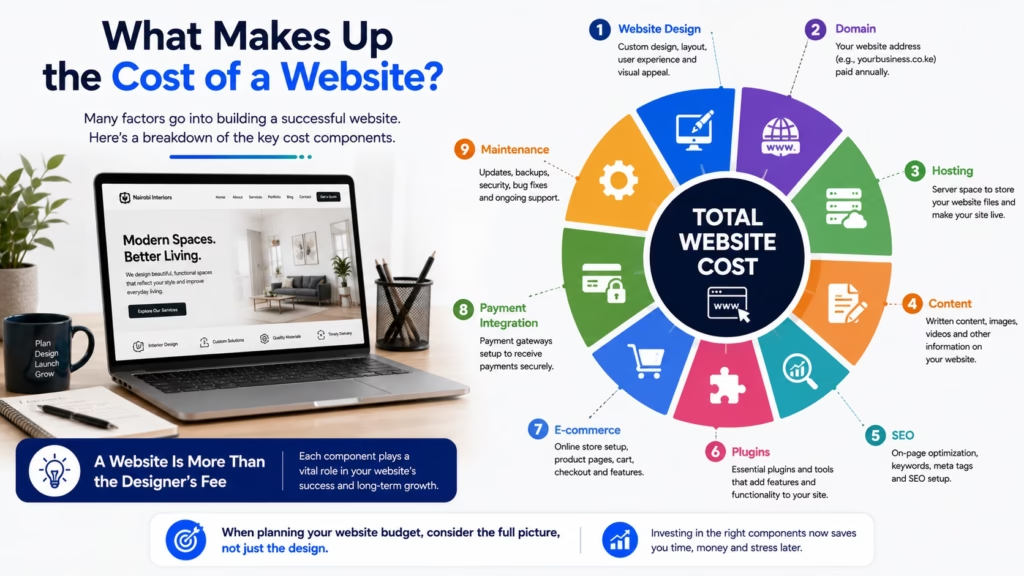
In this guide, we will break down the different costs involved in building and maintaining a website in Kenya in 2026. By the end, you will have a clearer understanding of what you should budget for before starting your website project.

How Much Does a Website Cost in Kenya?
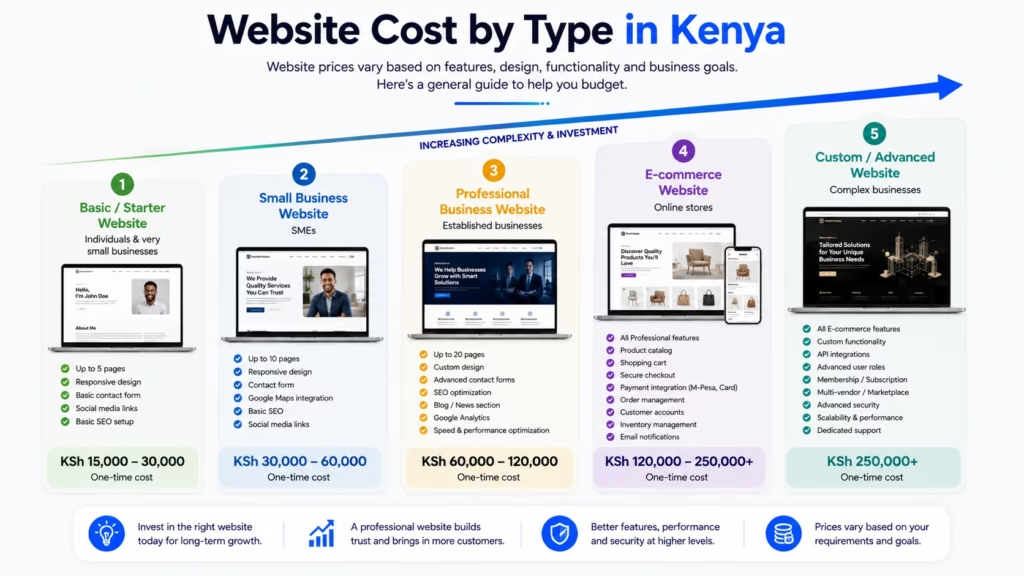
The website cost in Kenya depends largely on the type of website you want to build and the requirements of your business. A simple website for an individual or very small business will generally require a smaller investment than a professional business website, e-commerce store, or custom web application.
As an indicative guide, website projects can generally fall into the following categories:
| Website Type | Typical Cost Range | Best For |
|---|---|---|
| Basic/Starter Website | KSh 15,000–30,000 | Individuals and very small businesses |
| Small Business Website | KSh 30,000–60,000 | SMEs |
| Professional Business Website | KSh 60,000–120,000 | Established businesses |
| E-commerce Website | KSh 60,000–150,000+ | Online stores |
| Custom/Advanced Website | KSh 150,000+ | Complex businesses and organizations |
These figures should be treated as indicative ranges rather than universal prices. The actual website cost in Kenya can vary considerably depending on the designer or agency, project scope, design requirements, functionality, content, integrations, and ongoing services.
A freelancer may charge differently from a web design agency, while a highly customized project can cost considerably more than a standard WordPress website.
Important: Always confirm current Kenya-specific pricing before starting a project, because domain, hosting, software, design, and other service costs can change over time.
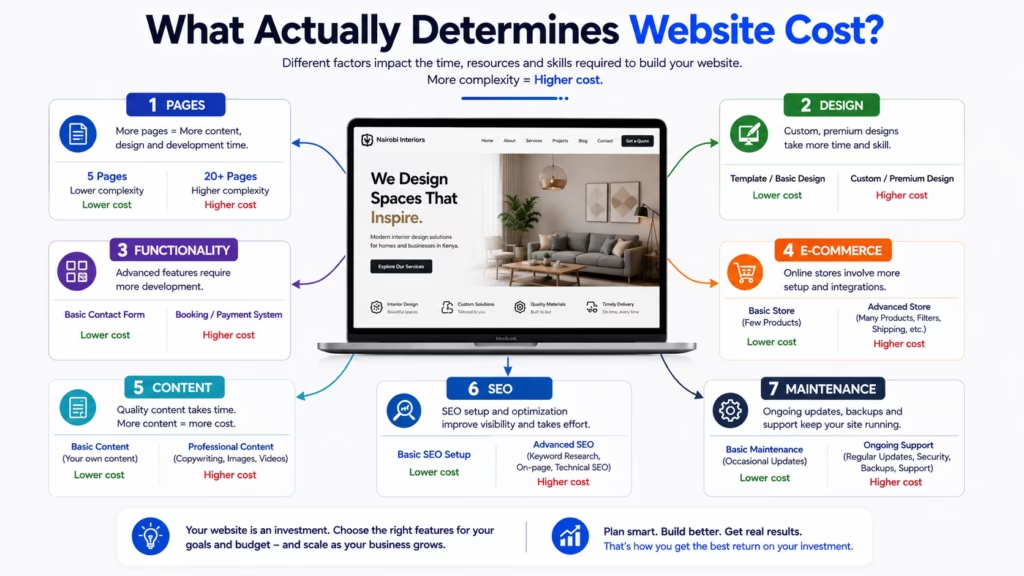
What Determines the Cost of a Website in Kenya?
The website cost in Kenya is determined by the requirements of the project rather than simply the number of pages. Two businesses may both need a five-page website but have completely different budgets because one may need a simple online presence while the other requires advanced functionality, e-commerce, professional content, or ongoing SEO.
1. Number of Website Pages
The number of pages affects the amount of content, design, and setup required. A simple website might have five essential pages such as Home, About, Services, Portfolio, and Contact, while a larger website may also include a Blog, individual service pages, product pages, case studies, and other resources.
2. Website Design Complexity
A website built from a basic template will generally require less design work than a highly customized website. Costs can increase when you require customized WordPress layouts, animations, interactive elements, advanced page structures, or a completely custom visual design.
3. Website Functionality
Additional functionality can also increase the project cost. Examples include:
- Contact forms
- Booking systems
- Membership systems
- Customer portals
- Search functionality
- Calculators
- Online payments
- Third-party integrations
The more specialized functionality your business requires, the more planning, configuration, testing, and technical work may be involved.
4. E-commerce Features
An online store requires more functionality than a standard informational website. You may need product catalogs, shopping carts, checkout pages, payment gateways, order management, shipping options, product variations, and customer accounts.
5. Content Creation
Website content may be supplied by the business owner or created professionally. Costs can therefore vary depending on whether you need website copy, product descriptions, blog content, photography, graphics, or videos.
6. SEO Requirements
Basic SEO setup is different from ongoing SEO services. Basic work may involve page structure, metadata, and initial optimization, while ongoing SEO can include keyword research, on-page SEO, technical SEO, local SEO, content strategy, Google Business Profile optimization, and link building.
7. Website Maintenance
Finally, building the website is not necessarily the end of the investment. Websites may require ongoing updates, security checks, backups, software updates, content changes, and technical maintenance. These recurring requirements should be considered when planning your overall website budget.
How Much Does a Basic Website Cost in Kenya?
A basic website is usually designed to give an individual, professional, or small business a simple and credible presence online. It is suitable for freelancers, personal brands, consultants, new businesses, and small service businesses that primarily need to explain what they do and make it easy for potential customers to get in touch.
The website cost in Kenya for this type of project is generally lower because it does not require complex functionality or extensive customization.
What Is Usually Included?
A basic website may include:
- WordPress installation
- A basic theme
- Essential pages such as Home, About, Services, and Contact
- Business contact information
- Contact form
- Mobile responsiveness
- Basic SEO setup
- Social media links
This type of website can provide a solid starting point for a new business that wants to establish an online presence without investing in advanced features immediately.
What May Cost Extra?
Some requirements may fall outside the basic package and increase the overall project cost. These can include:
- Professional copywriting
- Premium themes or plugins
- Advanced forms
- Professional photography
- Logo design
- An ongoing SEO campaign
- Website maintenance
Therefore, when comparing prices, don’t look only at the headline figure. Ask the website designer exactly what is included in the package and which services will require additional payment.
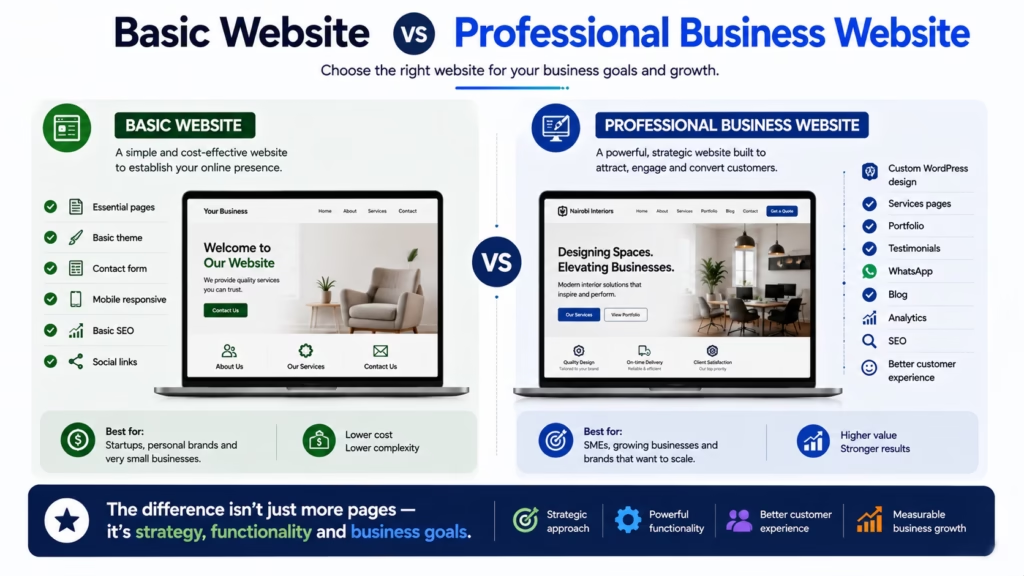
How Much Does a Small Business Website Cost in Kenya?
A small business website is more comprehensive than a basic starter website. It is designed for businesses that want to establish a stronger online presence, showcase their products or services professionally, generate enquiries, and provide customers with more information about the business.
The website cost in Kenya for a small business website will depend on factors such as the number of pages, design requirements, content, SEO, functionality, and whether additional integrations are required.
What Is Usually Included?
A small business website may include:
- A professionally designed homepage
- About Us page
- Services or Products page
- Contact page
- Portfolio or Our Work page
- Blog
- Testimonials
- Contact or enquiry forms
- WhatsApp integration
- Social media integration
- Mobile-responsive design
- Basic SEO setup
- Google Maps integration where appropriate
For example, a Nairobi-based consulting company may need pages explaining its different services, while a furniture business may need a product catalog and portfolio to showcase previous work.
What Makes It Different From a Basic Website?
The main difference is usually the depth, customization, and business functionality. A small business website may require more carefully planned content, additional pages, stronger calls-to-action, customized branding, and features designed around the customer’s journey.
This means you should not compare website prices based only on the number of pages. Two websites with the same number of pages can require very different amounts of work.
When requesting a quotation, ask the designer to provide a clear breakdown of what is included. This makes it easier to understand the website cost in Kenya and compare different proposals fairly.
How Much Does an E-commerce Website Cost in Kenya?
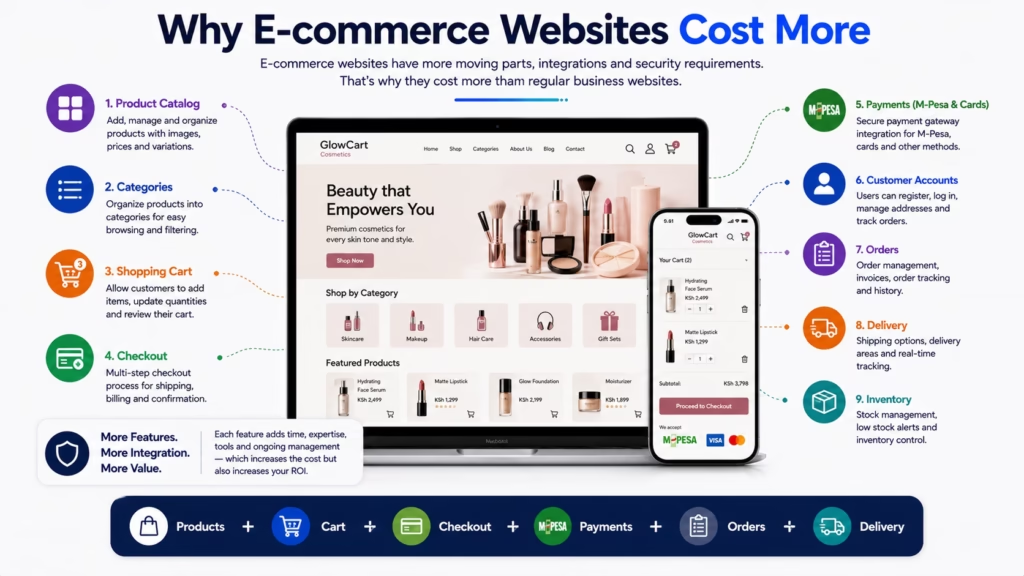
An e-commerce website allows a business to sell products or services online and receive orders through its website. Because an online store requires more functionality than a standard business website, the website cost in Kenya is usually higher.
A basic e-commerce website may start with a product catalog and checkout system, while a more advanced online store may require hundreds of products, multiple payment methods, shipping options, customer accounts, inventory management, product variations, and other integrations.
What Is Usually Included?
An e-commerce website may include:
- Product catalog
- Product categories
- Shopping cart
- Checkout page
- Payment integration
- Order management
- Customer accounts
- Product search
- Product variations
- Shipping or delivery options
- Contact and customer-support features
- Mobile-responsive design
- Basic SEO setup
For Kenyan businesses, payment integration is particularly important. Depending on the business and its requirements, the store may need to support M-Pesa, cards, bank payments, or other available payment solutions.
Why Does E-commerce Cost More?
An online store requires more planning, configuration, testing, and ongoing management than a simple informational website. Each product may also require images, descriptions, prices, categories, variations, and other information.
The cost can increase significantly when a business needs a large product catalog, advanced shipping rules, customized checkout processes, multiple payment integrations, or connections to other business systems.
Consider Ongoing Costs
When calculating the total website cost in Kenya, don’t consider only the initial development fee. An online store may also require ongoing hosting, domain renewal, payment-related fees, premium plugins, security, backups, maintenance, and product-content updates.
Before choosing an e-commerce package, ask for a detailed quotation showing exactly what is included and which costs will continue after the website is launched.
How Much Does a WordPress Website Cost in Kenya?
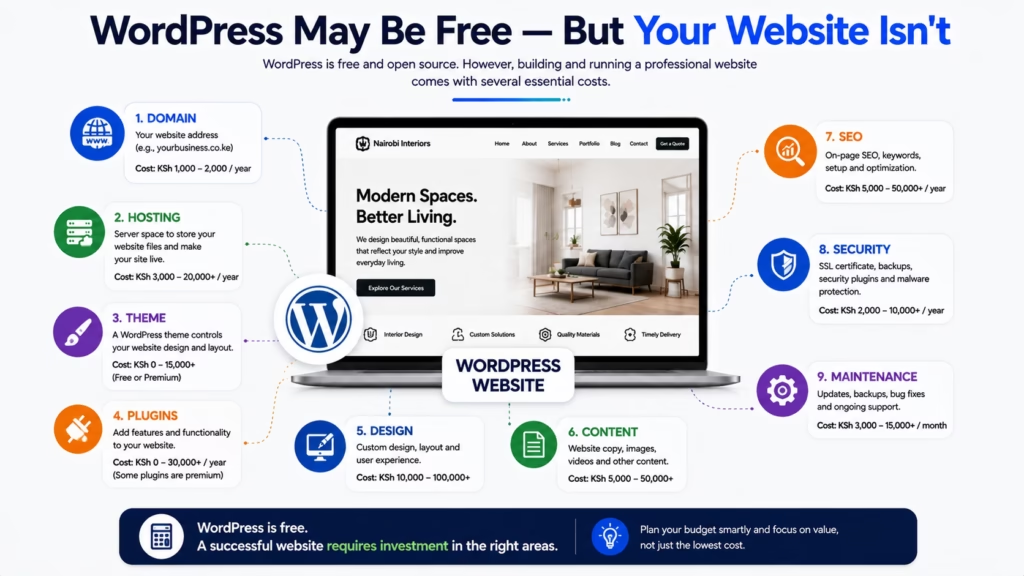
WordPress is a popular option for businesses that want a flexible website that can be updated and expanded over time. However, the website cost in Kenya for a WordPress website in Kenya is not simply the cost of installing WordPress. The total investment depends on the design, theme, plugins, functionality, content, and services required.
What Does a WordPress Website Usually Include?
A WordPress website may include:
- WordPress installation and configuration
- Website theme
- Custom page design
- Essential plugins
- Business pages
- Contact forms
- Mobile-responsive design
- Basic SEO setup
- Security configuration
- Backup setup
A business may start with a relatively simple WordPress website and later add features such as a blog, booking system, membership functionality, e-commerce, or other integrations.
Free vs Premium Themes and Plugins
WordPress provides access to both free and paid themes and plugins. Free options can reduce initial expenses, while premium tools may provide additional features, design options, support, or functionality.
However, installing many plugins simply because they are available is not always a good strategy. Too many unnecessary plugins can make website management more complicated and may affect performance or security.
WordPress Website Cost Is More Than the Platform
WordPress itself does not represent the entire cost of building a website. You may still need to pay for domain registration, hosting, professional design, content, premium tools, SEO, security, and maintenance.
Therefore, when comparing the website cost in Kenya for WordPress projects, look at the complete project scope rather than asking only how much it costs to install WordPress.
Website Domain Cost in Kenya
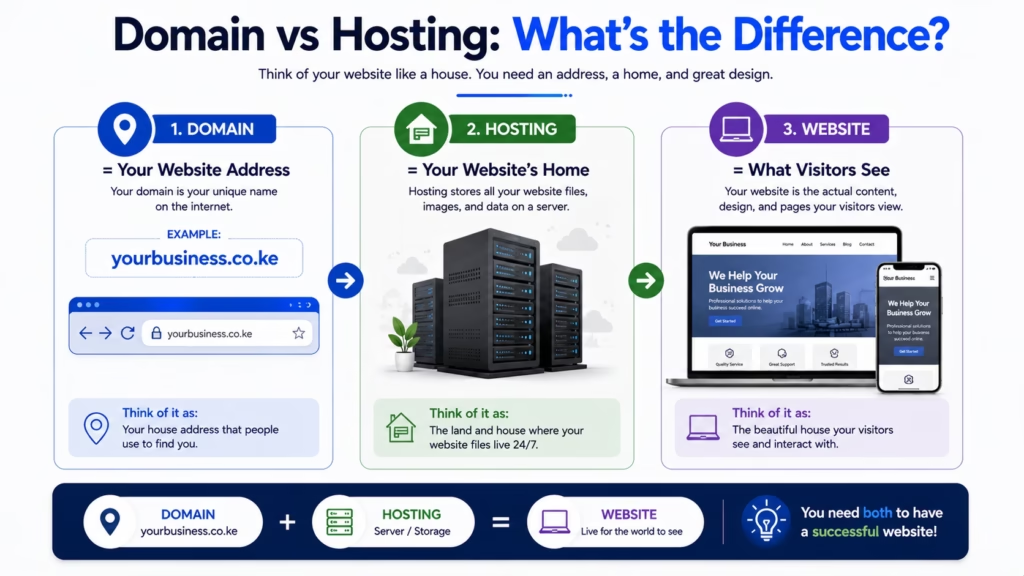
A domain name is the web address people use to access your website. It is one of the essential costs to consider when calculating the website cost in Kenya.
How Much Does a Domain Name Cost?
Domain prices vary depending on the extension you choose and the provider you register it with. Common options for Kenyan businesses include:
| Domain Extension | Example | Typical Consideration |
|---|---|---|
| .co.ke | yourbusiness.co.ke | Suitable for Kenyan businesses |
| .ke | yourbusiness.ke | Short Kenyan domain |
| .com | yourbusiness.com | Widely recognized internationally |
| .org | yourorganization.org | Common for organizations |
The price you pay when registering a domain may also differ from the renewal price. Some providers offer introductory promotions for the first year, after which the domain renews at the regular rate.
Domain Registration Is Usually Recurring
A domain name is not normally a one-time purchase. You generally register it for a specific period and renew it when that period expires. Therefore, when planning your website budget, remember to account for annual domain renewal costs.
Choose Your Domain Carefully
Your domain should ideally be short, memorable, easy to spell, and relevant to your business. If possible, use your business name or a name that clearly represents your brand.
For a Kenyan business primarily serving local customers, a .co.ke domain can communicate a connection to Kenya. A .com domain may be appropriate for businesses targeting customers in Kenya and international markets.
The domain is only one component of the overall website cost in Kenya. You will also need hosting and, depending on your project, design, content, SEO, and maintenance services.
Website Hosting Cost in Kenya
Web hosting is the service that provides the server space and resources where your website’s files, databases, images, and other content are stored. When someone enters your domain name into a browser, the hosting service helps deliver your website to that visitor.
Hosting is therefore another important component of the overall website cost in Kenya.
How Much Does Website Hosting Cost?
Hosting prices vary depending on the hosting provider, hosting plan, storage, performance, security features, traffic capacity, and level of support included.
For a small business website, shared hosting is often one of the more affordable starting options. As your website grows and requires more resources, you may eventually consider alternatives such as cloud hosting, VPS hosting, or other higher-performance hosting solutions.
What Should You Consider When Choosing Hosting?
Don’t choose a hosting provider based only on the cheapest advertised price. Consider:
- Performance and server resources
- Storage capacity
- Security features
- SSL certificate
- Backup options
- Customer support
- Uptime and reliability
- Scalability
- Renewal pricing
The introductory price may also be different from the price you pay when the hosting plan renews. Always check the renewal cost before committing to a provider.
Hosting Is a Recurring Cost
Unlike the initial website design fee, hosting is generally an ongoing expense. You need an active hosting plan for your website to remain accessible online.
Therefore, when calculating the complete website cost in Kenya, include both the initial hosting expense and future renewal costs in your budget.
A good hosting plan should provide enough resources for your current website while allowing room for growth as your traffic and business requirements increase.
Other Website Costs You Should Budget For
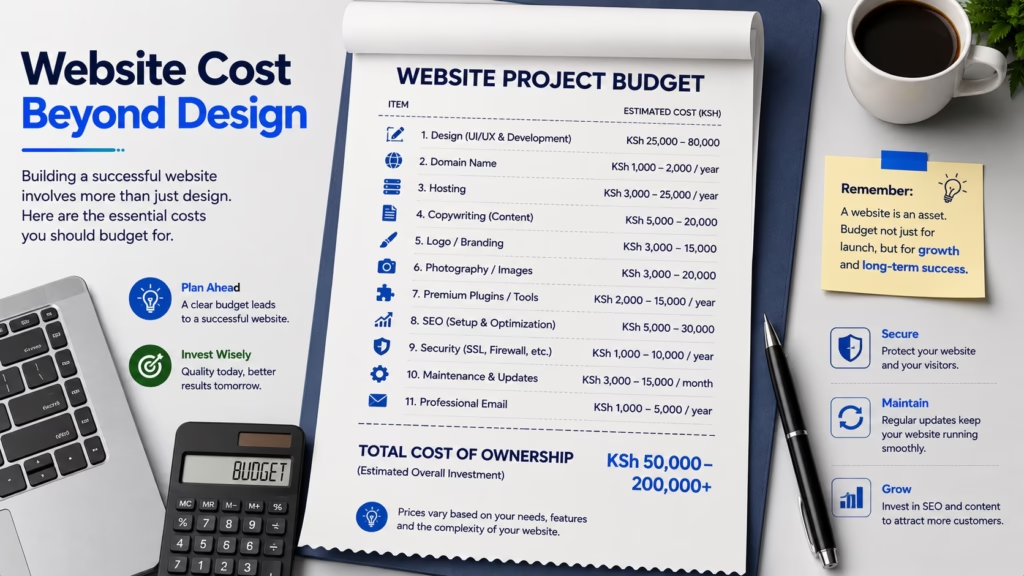
The initial website design fee is only one part of the total website cost in Kenya. Depending on your business and the type of website you are building, you may need to budget for additional services, tools, and recurring expenses. Understanding these costs before starting the project can help you avoid unexpected expenses later.
1. Website Content
Someone needs to create and organize the content on your website. This may include:
- Website copy
- Product descriptions
- Blog articles
- Professional photographs
- Graphics
- Videos
If you provide all the content yourself, you may reduce the project cost. If you hire professionals to create it, the overall investment will increase.
2. Logo and Brand Identity
If your business does not have a professional logo or established brand identity, you may need to budget for logo design, brand colors, typography, business graphics, and other visual assets.
3. Premium Themes and Plugins
Some WordPress websites require premium themes, page builders, plugins, or other software. These tools may involve one-time purchases or recurring annual subscriptions.
4. SSL and Security
An SSL certificate helps secure the connection between your website and its visitors. Many hosting providers include SSL with their hosting packages, but additional security tools or services may cost extra.
5. SEO Services
Basic SEO setup may be included in your website package, but ongoing SEO is a separate investment. Professional SEO may involve keyword research, content creation, technical optimization, local SEO, link building, and performance monitoring.
6. Website Maintenance
Websites need ongoing maintenance to remain secure and functional. Maintenance may include software updates, backups, security monitoring, troubleshooting, and content updates.
7. Business Email
You may also want a professional email address using your domain, such as info@yourbusiness.co.ke. Depending on the email provider and plan, this can create an additional recurring expense.
When calculating your website cost in Kenya, consider both the initial development cost and these ongoing or additional expenses.
Website Design Cost vs Website Development Cost
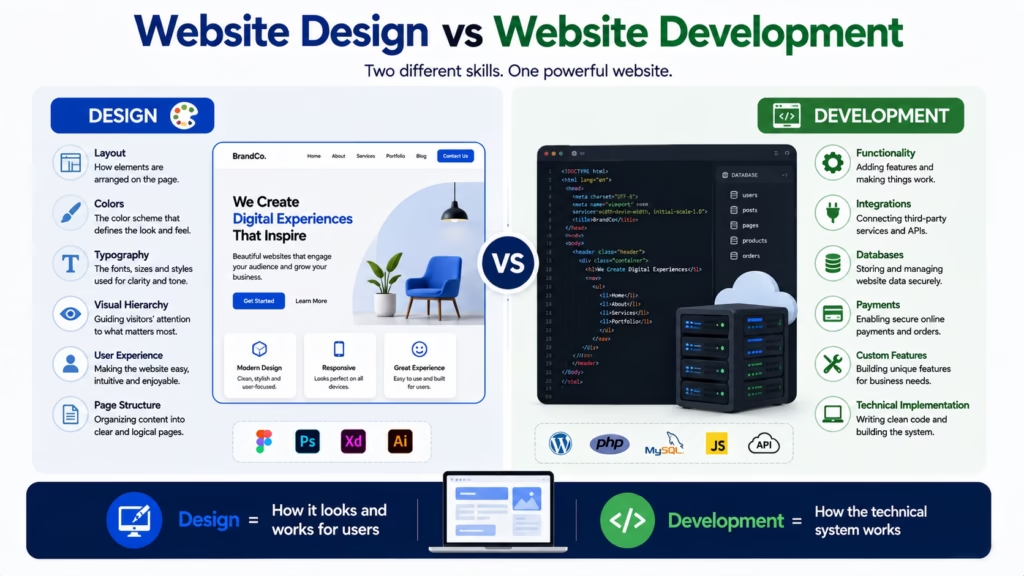
The terms website design and website development are often used interchangeably, but they can refer to different parts of the website creation process. Understanding the difference can help you better understand your quotation and the website cost in Kenya.
What Is Website Design?
Website design focuses primarily on the visual appearance and user experience of the website. It includes elements such as:
- Page layouts
- Colors
- Typography
- Images
- Navigation
- Buttons
- Branding
- Mobile responsiveness
- User experience
The goal is to make the website attractive, clear, easy to navigate, and aligned with the business brand.
What Is Website Development?
Website development focuses more on the technical implementation and functionality of the website. Development can involve setting up databases, creating custom functionality, integrating third-party services, configuring payment systems, and building features that go beyond standard website layouts.
For example, a simple five-page WordPress website may require relatively straightforward implementation, while an online store with payment integration, inventory management, customer accounts, and customized functionality requires considerably more technical work.
Why Does the Difference Matter?
When requesting a website quotation, ask whether the quoted price covers both design and development or only specific parts of the project.
For a typical WordPress small business website, one professional may handle both the design and implementation. More complex projects may involve multiple specialists.
Understanding what you are actually paying for gives you a clearer picture of the website cost in Kenya and makes it easier to compare different website proposals.
Freelancer vs Web Design Agency: Which Costs More?
When comparing the website cost in Kenya, you may receive different quotations from freelancers and web design agencies for what appears to be the same type of website. This does not necessarily mean that one option is better than the other. The difference often comes down to the level of service, expertise, resources, project management, and support included in the package.
Hiring a Freelancer
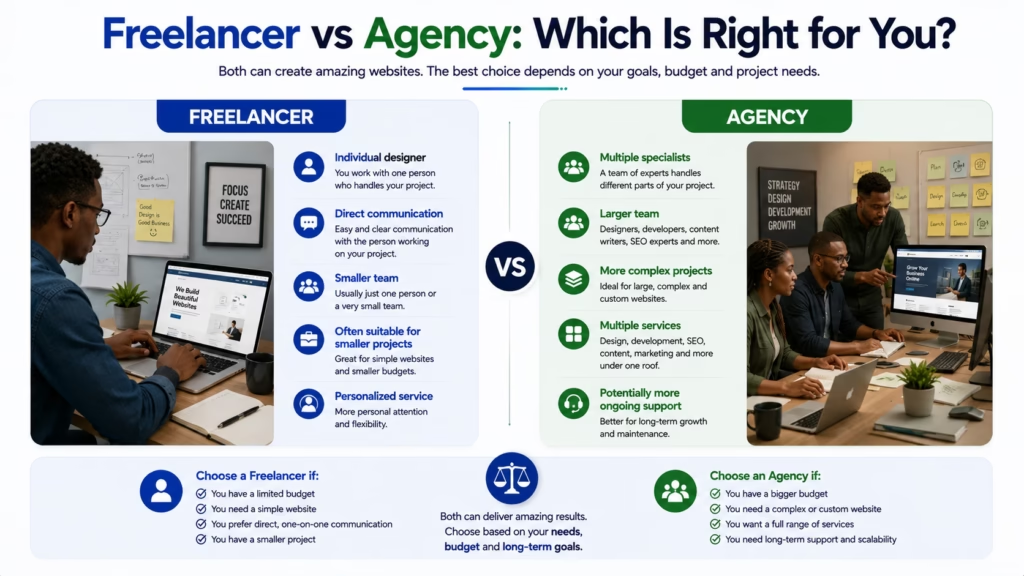
A freelancer is an individual who works independently on website projects. Freelancers may have lower operating costs than agencies, which can allow them to offer more affordable website packages.
A freelancer can be a good option for a small business that needs a straightforward website and has a limited budget. However, the level of service can vary significantly between individuals, so it is important to review their portfolio, experience, communication, process, and previous client work.
Hiring a Web Design Agency
A web design agency typically operates as a team and may have specialists responsible for different areas, such as design, development, content, SEO, and project management.
An agency may therefore charge more because you are potentially paying for a broader range of expertise and resources. Agencies can be particularly suitable for larger or more complex projects that require multiple skills.
Which Option Should You Choose?
There is no universal answer. Consider your budget, website requirements, project complexity, timeline, and need for ongoing support.
For a straightforward small business website, an experienced freelancer may be sufficient. For a complex website requiring multiple services and specialists, an agency may provide a more suitable solution.
Rather than choosing solely based on the lowest website cost in Kenya, compare the value, deliverables, experience, support, and expected outcome included in each proposal.
Cheap Website vs Professional Website: What’s the Difference?
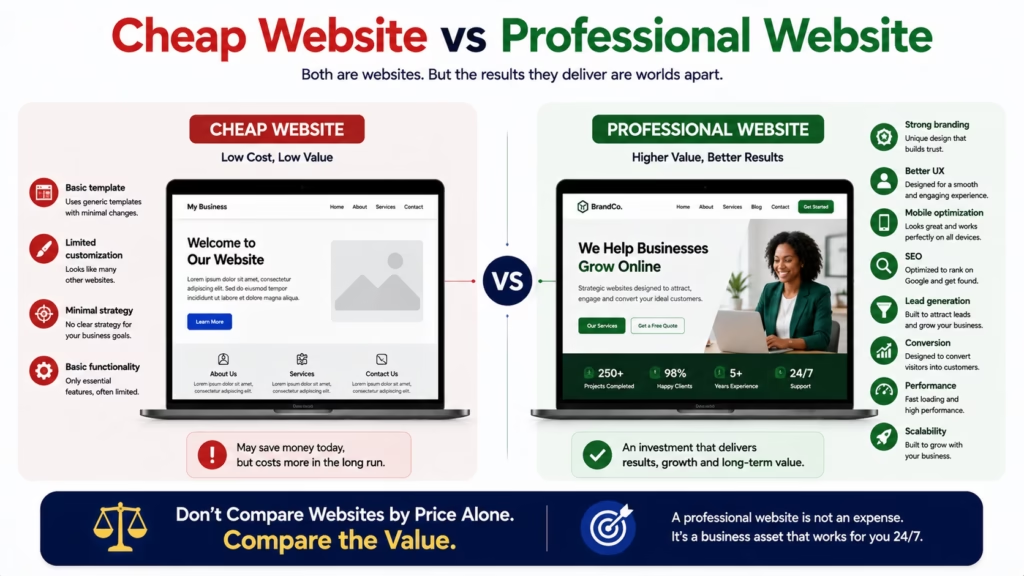
When comparing the website cost in Kenya, it can be tempting to choose the cheapest quotation available. However, the lowest price does not always represent the best value. Two websites may look similar at first glance while being very different in terms of planning, design, functionality, performance, security, and ongoing support.
What Is a Cheap Website?
A low-cost website may use a basic template with limited customization and functionality. It can be suitable for someone who simply needs a basic online presence, but it may have limitations depending on the package.
Before choosing a very cheap option, find out exactly what you are receiving. Ask whether the price includes the domain, hosting, content, mobile optimization, SEO, security, backups, revisions, and support.
What Is a Professional Website?
A professional website typically involves more planning and customization. The designer considers the business goals, target audience, branding, content structure, user experience, mobile responsiveness, SEO, and conversion opportunities.
A professional website may also include features such as:
- Customized page layouts
- Professional branding
- Clear calls-to-action
- Mobile optimization
- Contact and enquiry forms
- WhatsApp integration
- SEO setup
- Security and backups
- Performance optimization
- Ongoing maintenance options
Look at Value, Not Just Price
The cheapest website may save money initially, but a poorly planned website can require additional work later. On the other hand, a higher-priced website is not automatically better.
When evaluating the website cost in Kenya, consider what you are actually receiving for your investment. Compare the quality, scope, functionality, support, experience, and expected business value rather than choosing a provider based solely on the lowest quotation.
How to Save Money When Building a Website in Kenya
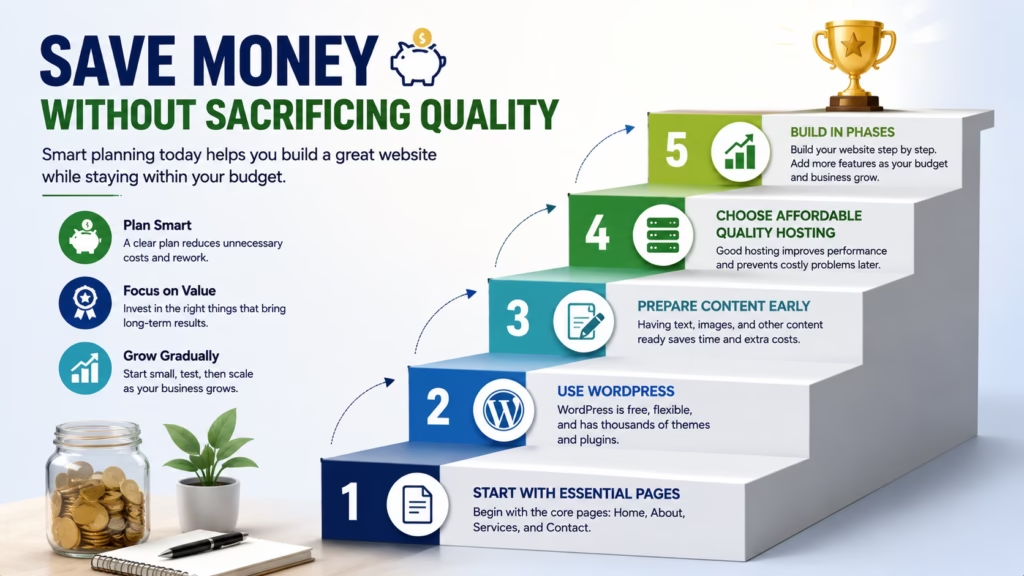
Building a website does not necessarily mean spending a large amount of money at the beginning. You can control your website cost in Kenya by prioritizing the features your business actually needs and avoiding unnecessary expenses.
1. Start With Essential Features
You do not need every possible feature when launching your first website. Start with the pages and functionality that directly support your business goals. You can add advanced features as your business grows.
2. Provide Your Own Content
If you can prepare your business information, service descriptions, images, testimonials, and other content yourself, you may reduce the amount you need to spend on content creation.
However, make sure the content is clear, accurate, and professionally presented.
3. Choose WordPress
For many small businesses, WordPress can provide a practical and flexible foundation without requiring a completely custom website from scratch. You can begin with essential functionality and expand the website later.
4. Compare Complete Quotes
Do not compare designers based only on their advertised starting price. Request a detailed quotation showing exactly what is included. A slightly higher quote may provide significantly more value if it includes additional pages, SEO, security, training, or support.
5. Avoid Unnecessary Features
Features should serve a purpose. Don’t pay for complicated functionality simply because it looks impressive. Focus your budget on elements that improve the customer experience or help achieve your business objectives.
6. Budget for Recurring Costs
Plan for domain renewal, hosting, maintenance, premium software, and other recurring expenses from the beginning. This helps you understand the total website cost in Kenya rather than focusing only on the initial design fee.
The goal is not simply to build the cheapest website possible. It is to build the right website for your current needs while leaving room for future growth.
How to Choose a Website Designer in Kenya
Choosing the right website designer is an important decision because the person or team you hire will influence the quality, functionality, and long-term performance of your website. When comparing website cost in Kenya, don’t focus only on the cheapest quotation. Consider the experience, process, quality, communication, and services included.
Review Their Portfolio
Start by looking at previous projects. A portfolio can help you evaluate the designer’s ability to create professional layouts, responsive websites, business websites, e-commerce stores, and other relevant projects.
If possible, look for examples from businesses similar to yours. This can give you a better idea of whether the designer understands your industry and target customers.
Understand Their Process
A professional website designer should have a clear process for handling projects. Ask how they approach:
- Business discovery
- Website planning
- Content
- Design
- Development
- SEO
- Testing
- Launch
- Maintenance
A structured process can reduce misunderstandings and help keep the project organized.
Check What Is Included
Before accepting a quotation, ask exactly what you are paying for. For example, does the package include the domain, hosting, number of pages, content, SEO, contact forms, revisions, training, and post-launch support?
Two designers can quote completely different prices because their packages contain different deliverables.
Ask About Mobile Responsiveness
Your website should work properly on smartphones, tablets, and desktop computers. Ask the designer how they test websites across different screen sizes.
Consider SEO Knowledge
If you want customers to discover your website through Google, your designer should understand basic SEO principles. Ask whether the project includes elements such as SEO-friendly page structures, titles, meta descriptions, headings, URLs, image optimization, and local SEO considerations.
Ask About Maintenance and Support
Find out what happens after your website goes live. Ask whether the designer provides technical support, updates, backups, security monitoring, content changes, or maintenance packages.
Ultimately, the right designer is not necessarily the one offering the lowest website cost in Kenya. Look for someone who can understand your business, communicate clearly, deliver what was agreed upon, and provide a website that supports your long-term goals.
Questions to Ask Before Accepting a Website Quote
Before accepting a website quotation, make sure you understand exactly what you are paying for. A low initial price can become more expensive if important services are excluded from the package. Asking the right questions will help you compare proposals and understand the total website cost in Kenya.
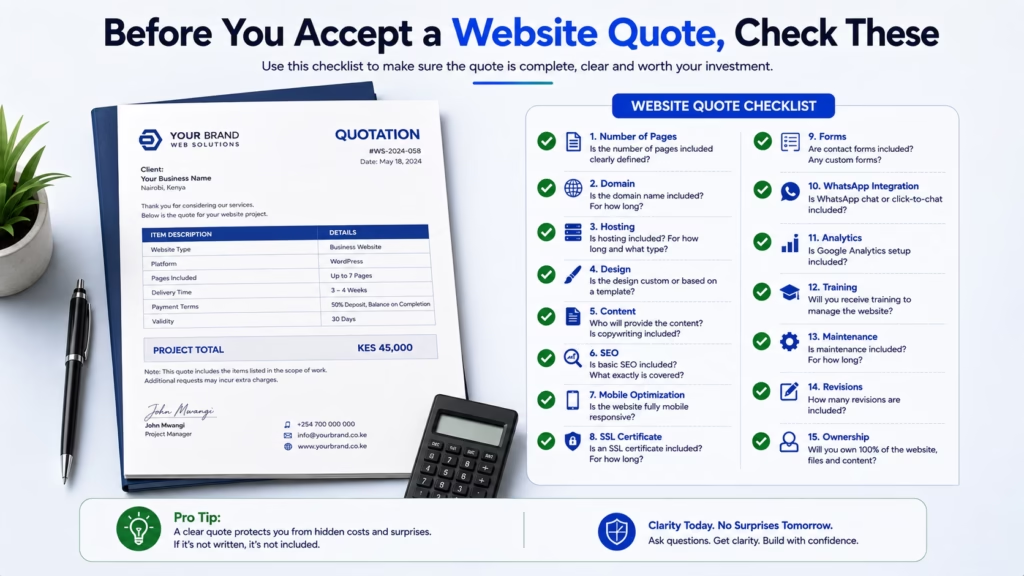
What Is Included in the Price?
Ask whether the quotation includes:
- Number of website pages
- Website design and development
- Domain registration
- Web hosting
- SSL certificate
- Contact forms
- Mobile responsiveness
- Basic SEO
- Content upload
- Social media integration
- WhatsApp integration
- Revisions
- Website testing
- Launch
- Training
- Post-launch support
Are There Any Additional Costs?
Ask the designer to identify costs that are not included in the quoted price. These might include premium plugins, paid themes, professional copywriting, photography, payment integrations, additional pages, or advanced functionality.
What Are the Recurring Costs?
Some website expenses continue after the website is launched. Ask about domain renewal, hosting renewal, software subscriptions, maintenance, security, backups, and ongoing SEO.
How Many Revisions Are Included?
Design revisions can take additional time. Find out how many rounds of revisions are included and what happens if you require changes beyond the agreed number.
Who Owns the Website?
Confirm that you will have appropriate access to your domain, hosting account, WordPress website, website content, and other important assets. This is particularly important if you decide to change providers in the future.
What Happens After Launch?
Ask whether the designer provides training, technical support, maintenance, or troubleshooting after the website goes live.
Getting clear answers to these questions will help you understand the actual website cost in Kenya and avoid unexpected expenses or misunderstandings later in the project.
How Much Should a Small Business Budget for a Website in Kenya?
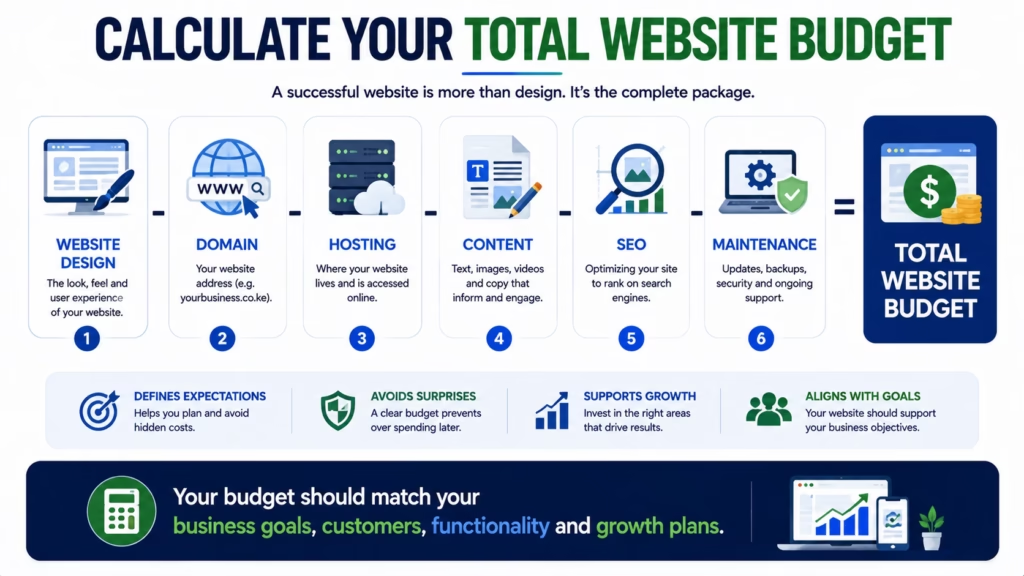
There is no single amount that every small business should spend on a website. Your budget should reflect your business goals, current stage, target customers, required functionality, and expected return on investment. When planning the website cost in Kenya, it is useful to think beyond the initial design fee and consider the complete cost of establishing and maintaining your online presence.
Start With Your Business Goals
First, determine what you want your website to accomplish. A business that simply needs an online presence may require a relatively simple website, while a business that wants to generate leads, publish content, accept bookings, or sell products online may need a larger investment.
For example:
- New or very small business: Start with essential pages and functionality.
- Growing SME: Invest in a professional website with stronger branding, SEO, content, and lead-generation features.
- Online store: Budget for e-commerce functionality, payment integration, product management, and ongoing maintenance.
- Established business: Consider a more comprehensive website with advanced functionality, content marketing, SEO, and integrations.
Think About the Total Cost
Your budget should account for both one-time and recurring expenses. These may include:
- Website design and development
- Domain registration
- Web hosting
- Content creation
- SEO
- Premium themes and plugins
- Security and backups
- Maintenance
- Professional email
A business should therefore avoid spending its entire budget on the initial design while ignoring the costs required to keep the website running.
Focus on Value
The objective should not be to find the cheapest website possible. Instead, invest in a website that is appropriate for your current needs, provides a professional customer experience, and can grow with your business.
A well-planned website can become a long-term business asset rather than simply another business expense.
Is a Website Worth the Investment for a Kenyan Small Business?
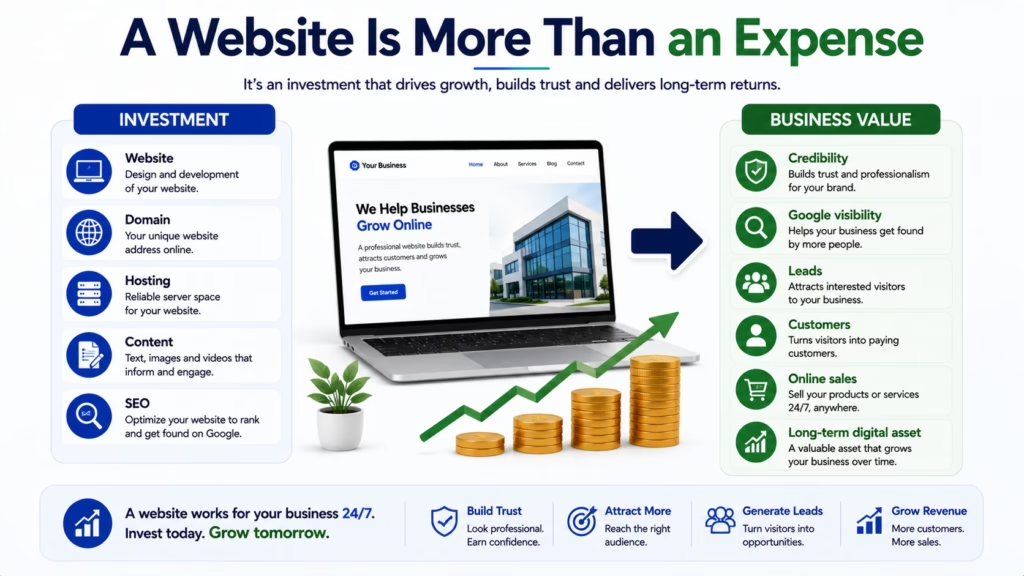
For a small business, a website should not be viewed simply as another expense. It can become a long-term digital asset that helps your business establish credibility, attract potential customers, showcase products or services, and generate enquiries. The real question is not only “How much does a website cost in Kenya?” but also “What can the website help my business achieve?”
A Website Can Build Credibility
When potential customers search for your business online, a professional website can provide important information about who you are, what you offer, where you are located, and how customers can contact you. This can help create confidence, particularly for customers who are discovering your business for the first time.
A Website Can Support Customer Acquisition
Your website can work alongside channels such as Google Search, social media, email marketing, and WhatsApp. Useful content and properly optimized pages can attract people who are actively searching for information, products, or services related to your business.
A Website Can Work Beyond Business Hours
Unlike a physical shop or office, your website can remain accessible at any time. Customers can visit your pages, read about your services, view products, submit enquiries, or find your contact information even when your business is closed.
Think About the Return on Investment
A website becomes more valuable when it contributes to measurable business outcomes. For example, if your website consistently generates qualified enquiries or sales, the initial investment can potentially be recovered through new business.
However, simply having a website does not guarantee customers. You still need quality content, SEO, marketing, a good user experience, clear calls-to-action, and consistent promotion.
The best approach is to treat your website as part of your overall digital marketing system rather than as a standalone expense.
How DigitalComputerCamp Can Help You Build a Website in Kenya
Building a website is easier when you have a clear process and understand what is included in the project. At DigitalComputerCamp, we help individuals and businesses establish a professional online presence through practical WordPress website design.
Our approach is focused on creating websites that are not only visually professional but also useful for the business and its customers.
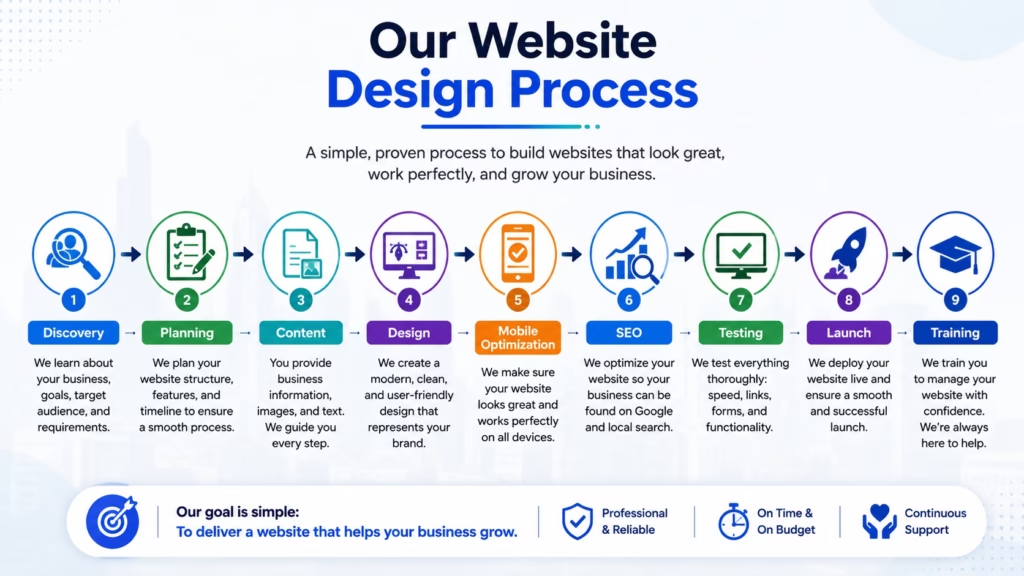
1. Website Discovery
We begin by understanding your business, target audience, products or services, competitors, goals, and what you want the website to achieve. This gives the project a clear direction before design begins.
2. Website Planning
We plan the website structure, pages, navigation, content requirements, calls-to-action, and functionality. This helps ensure that visitors can easily find the information they need.
3. WordPress Website Design
We use WordPress to create websites that can be customized and expanded as your business grows. Depending on the project, this can include business pages, portfolios, blogs, contact forms, WhatsApp integration, and e-commerce functionality.
4. SEO-Friendly Setup
We consider basic SEO during the website-building process, including page structure, headings, URLs, metadata, content organization, and other foundational elements.
5. Testing and Launch
Before launch, we check important elements such as mobile responsiveness, navigation, forms, links, images, and overall functionality. Once the website is ready, we complete the launch process and make it available online.
6. Training and Support
We can also help business owners understand how to manage their WordPress website and keep their content updated after launch.
If you are comparing the website cost in Kenya, our goal is to help you understand what your business actually needs so that you can make an informed investment rather than paying for unnecessary features.
Ready to discuss your website project? Contact DigitalComputerCamp to book a free consultation.
Frequently Asked Questions About Website Costs in Kenya
When planning a website project, business owners often have questions about pricing, hosting, domains, WordPress, maintenance, and the services included in a website package. Here are some of the most common questions about website cost in Kenya.
The cost varies depending on the type, size, design, functionality, content, and ongoing requirements. A basic website may cost less than a professional business website, while an e-commerce or custom website can require a significantly larger investment.
You can reduce costs by using WordPress, choosing an appropriate hosting plan, preparing your own content, starting with essential features, and avoiding unnecessary functionality. However, focus on value rather than simply choosing the cheapest option.
The cost depends on the design, theme, plugins, number of pages, functionality, content, and services required. WordPress itself is only one component of the overall project.
Domain prices vary according to the domain extension and provider. Common options include .co.ke, .ke, .com, and .org. Remember that domains normally require renewal after their registration period.
Hosting prices vary according to the provider, plan, resources, performance, security, and support. Shared hosting can be an affordable starting point for smaller websites, while larger websites may require more powerful hosting.
Generally, yes. Domain registration and hosting are normally recurring expenses. Always check the renewal prices because introductory prices may differ from regular renewal rates.
Not necessarily. Some website designers include hosting in their packages, while others charge for it separately. Always check the quotation to determine exactly what is included.
An e-commerce website generally costs more than a basic business website because it requires features such as product catalogs, shopping carts, checkout, payments, order management, and potentially shipping and inventory functionality.
Yes. Website-building platforms and content management systems allow individuals to create websites themselves. However, professional assistance can save time and help with design, SEO, performance, security, functionality, and troubleshooting.
Yes. Websites may require software updates, backups, security monitoring, content updates, performance optimization, and technical support. These should be considered when calculating your long-term website cost in Kenya.
A website can be a valuable investment when it supports specific business objectives such as building credibility, attracting search traffic, generating enquiries, showcasing products or services, or selling online. The value depends on how effectively the website is planned, promoted, and maintained.
Conclusion
So, how much does a website cost in Kenya in 2026?
The answer depends on what you want your website to accomplish. A basic website for a small business will require a different investment from a professional business website, e-commerce store, or custom web project.
When planning your budget, look beyond the initial design fee. Consider the domain, hosting, content, SEO, functionality, premium tools, security, maintenance, and other recurring expenses that may form part of the overall investment.
Most importantly, don’t choose a website based solely on price. A very cheap website may not provide the functionality, user experience, SEO foundation, or support your business needs. At the same time, a more expensive website is not automatically better.
The right approach is to determine your business goals, understand your customers, identify the features you actually need, and choose a website solution that provides the right balance of cost, quality, functionality, and long-term value.
Whether you are launching a new business or improving an existing online presence, understanding the complete website cost in Kenya can help you plan your investment with greater confidence.
Final Thoughts: Plan Your Website Investment Carefully
A website is an investment in your business’s digital presence. Instead of asking only “How much does a website cost?”, ask what you need the website to accomplish and what level of investment is appropriate for those goals.
Before starting your project, define your objectives, understand your target audience, prepare your content, determine the functionality you need, and establish a realistic budget. Then compare website providers based on their experience, portfolio, process, deliverables, support, and overall value—not price alone.
Remember to budget for both the initial project and ongoing expenses such as your domain, hosting, maintenance, security, content, and SEO.
If you are ready to build a professional website for your business, DigitalComputerCamp can help you plan, design, launch, and grow your online presence with WordPress.
Ready to Build Your Website?
Book a free website consultation with DigitalComputerCamp, and let’s discuss your business, your goals, your website requirements, and the right solution for you.